
Introduction
Lucknow is a city where shopping has never been just about buying things. It is about conversations, relationships, traditions, and memories passed down through generations. As someone who has grown up in this city, I have seen how markets here are woven into everyday life — from festive preparations and wedding shopping to simple evening strolls and family outings. Each market in Lucknow has its own rhythm, personality, and purpose, reflecting the diverse lifestyles of the people who shop there.
Unlike modern malls that feel similar everywhere, Lucknow’s traditional markets have their own character. Some are calm and elegant, some are crowded and energetic, some deeply traditional, and some purely practical. Yet, all of them share one common quality — they make shopping a human experience. You don’t just walk in, pick an item, and leave. You talk to shopkeepers, compare options, bargain, seek opinions, and often return home with more than just purchases — you carry stories.
For women especially, these markets are more than commercial spaces. They are places of independence, decision-making, and expression. From choosing fabrics and jewellery to planning festivals and family events, markets play a central role in daily life. I have seen mothers guiding daughters, sisters shopping together, and friends bonding over simple choices — these moments quietly define the social fabric of the city.
Lucknow’s markets also represent a balance between tradition and change. While chikankari artisans work in narrow lanes, modern showrooms stand nearby. While bargaining continues in old bazaars, digital payments have found their way in. This coexistence is what makes the city unique.
Understanding Lucknow means walking through its markets. They reveal how the city thinks, lives, and grows — slowly, gracefully, and with deep respect for its roots.
1. Hazratganj – The Timeless Heart of Lucknow’s Shopping Culture
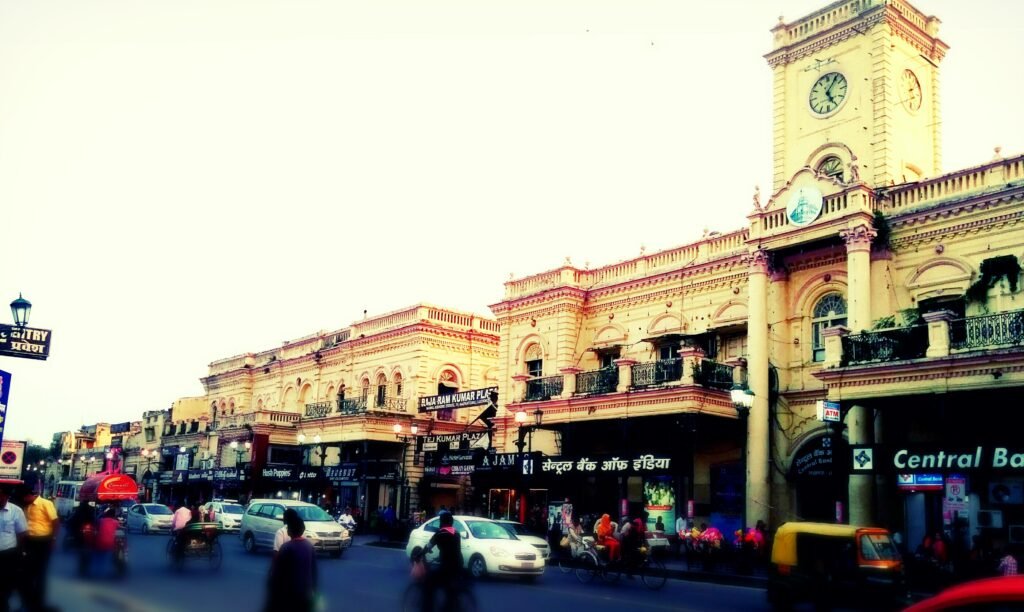
By Mohit – Own work, CC BY-SA 4.0, https://commons.wikimedia.org/w/index.php?curid=36800022
Hazratganj is not just a shopping market; it is an emotion for anyone who has lived in or visited Lucknow. As a lifelong resident, I can say with confidence that no matter how many malls come up, Hazratganj holds a place that cannot be replaced. It represents elegance, history, and the slow, graceful lifestyle that Lucknow is known for. Walking through Hazratganj feels like walking through the city’s collective memory.
What makes Hazratganj special is its perfect balance of old and new. You will find heritage buildings standing beside modern showrooms, traditional shops next to branded outlets, and street vendors operating comfortably near cafés and bookstores. From clothing and footwear to books, cosmetics, accessories, and home décor, Hazratganj offers something for every age group and budget.
This market is especially popular for:
- Readymade garments and ethnic wear
- Footwear, including leather shoes and sandals
- Cosmetics and beauty products
- Books, stationery, and gift items
Hazratganj is also known for its iconic shops that have served generations of Lucknowites. Many families still visit the same stores their parents once shopped from. That continuity builds trust and familiarity, something rare in fast-changing cities.
Beyond shopping, Hazratganj is a social space. People come here to meet friends, sit at cafés, enjoy street food, or simply take a leisurely walk. For women, it feels safe, open, and welcoming, especially during evenings. As a teacher and a mother, I have always appreciated markets where comfort and safety go hand in hand.
Hazratganj teaches us that shopping doesn’t have to be rushed. It can be calm, graceful, and meaningful — just like Lucknow itself.
2. Aminabad – Where Lucknow Shops with Its Heart
If Hazratganj is elegance, Aminabad is energy. This market is loud, crowded, colourful, and full of life — and that is exactly why people love it. Aminabad is one of the oldest and most loved markets in Lucknow, especially among women and families who believe in value-for-money shopping.
Aminabad is famous for offering variety at affordable prices. From everyday wear to festive shopping, this market caters to all. The lanes may be narrow, but the choices are endless.
Popular items here include:
- Sarees, suits, kurtis, and dress materials
- Bangles, artificial jewellery, and accessories
- Footwear at reasonable rates
- Household items and cosmetics
One of the strongest reasons Aminabad remains popular is bargaining. For many women, shopping here is not just about buying things — it is an experience. You talk, compare, bargain, and finally walk away feeling satisfied. That sense of involvement creates a strong emotional connection with the market.
Aminabad is also deeply rooted in family shopping traditions. Mothers bring daughters, sisters shop together, and festive visits become almost ritualistic. During Diwali, Eid, weddings, or school seasons, Aminabad feels like the centre of the city’s pulse.
As someone who understands household budgets, I respect markets like Aminabad. They allow families to shop well without overspending. It is practical, vibrant, and deeply Lucknowi.
3. Chowk – The Soul of Traditional Lucknow Shopping
Chowk is where Lucknow’s cultural and artistic soul truly lives. This market is not about speed or convenience; it is about heritage, craftsmanship, and patience. Chowk is especially famous for traditional items that reflect the city’s history and artistic excellence.
The market is best known for:
- Chikankari embroidery
- Zardozi and handwork garments
- Ittar (traditional perfumes)
- Silver jewellery and handicrafts
Shopping in Chowk requires time and attention. You don’t rush here. You observe, ask questions, and understand the craftsmanship behind each piece. Many shopkeepers belong to families that have practiced the same craft for generations, and their knowledge is invaluable.
As a teacher, I find Chowk educational. It teaches respect for skill, patience, and tradition. For students and young people, visiting Chowk is a lesson in how culture survives through everyday work.
Women especially appreciate Chowk for its authentic ethnic wear. If you want original chikankari rather than mass-produced designs, this is where you come. Prices may vary, but the quality and authenticity justify the effort.
Chowk reminds us that shopping can also be about preserving culture. Every purchase here supports artisans and keeps Lucknow’s legacy alive.
4. Alambagh Market – Practical Shopping for Everyday Needs
Alambagh market represents the real, everyday Lucknow. It is not glamorous, but it is efficient, accessible, and extremely useful. Located near major transport hubs, Alambagh market caters to working families, students, and daily commuters.
This market is known for:
- Affordable clothing and footwear
- Daily household essentials
- Electronics and mobile accessories
- Street food and quick meals
Alambagh’s biggest strength is convenience. You can shop, eat, travel, and return home without hassle. For people living in nearby areas, it saves time and effort.
As a homemaker, I value markets like Alambagh because they understand real needs. You can shop for children, household items, and personal essentials in one visit. Prices are reasonable, and shops are practical rather than decorative.
The market is especially busy during evenings and weekends, reflecting its role in daily life. It may not attract tourists, but for locals, it is dependable and essential.
5. Nakhas Market – The Old Trading Hub of Lucknow
Nakhas market may not be well-known to tourists, but it plays a vital role in Lucknow’s traditional trade ecosystem. Historically, Nakhas was a wholesale and trading market, and even today, it remains important for bulk buying and specialised goods.
The market is known for:
- Wholesale household items
- Animal feed and related trade
- Traditional trading activities
- Old-style local commerce
Nakhas reflects a side of Lucknow that operates quietly behind the scenes. It supports small businesses, traders, and local supply chains. While it may not be visually appealing, it is economically significant.
For those interested in understanding how cities function beyond malls and showrooms, Nakhas offers insight into grassroots commerce. It shows how traditional markets continue to sustain livelihoods despite modern retail growth.
As a writer documenting Lucknow’s many layers, I believe markets like Nakhas deserve recognition. They may not be glamorous, but they are honest, hardworking, and deeply rooted in the city’s economic fabric.
Conclusion
Lucknow’s markets are far more than commercial zones — they are living reflections of the city’s soul. Each market tells a different story, yet together they create a complete picture of how Lucknow functions as a social, cultural, and economic space. From the refined elegance of Hazratganj to the vibrant chaos of Aminabad, from the artistic heritage of Chowk to the everyday practicality of Alambagh and the trading legacy of Nakhas, every market serves a purpose that goes beyond shopping.
What stands out most is the sense of continuity. These markets have evolved, yet they have not lost their identity. Generations have walked the same lanes, visited the same shops, and trusted the same traders. That sense of familiarity builds emotional security — something that modern retail spaces often lack. In Lucknow, markets are places where people feel known and understood.
For women, these spaces hold particular importance. Markets offer freedom of choice, negotiation, and decision-making. They are places where women manage households, prepare for festivals, plan weddings, and express personal style. Over the years, I have noticed how women navigate these spaces confidently — balancing budgets, preferences, and family needs with quiet strength. These everyday interactions shape confidence and independence in subtle but powerful ways.
Markets also act as informal classrooms. Children learn values like patience, communication, and money management. Young people observe craftsmanship, business ethics, and customer relationships. Tourists gain insight into local culture simply by watching how people shop, talk, and move through these spaces. Markets teach lessons that no textbook can fully capture.
In a rapidly modernising city, it is tempting to view traditional markets as outdated. But Lucknow proves that progress does not require erasure. Instead, it allows coexistence. Digital payments now flow through old bazaars. Social media brings new customers to age-old shops. Artisans find wider audiences without leaving their lanes. This adaptability ensures that markets remain relevant while staying true to their roots.
As a teacher and a writer, I believe these markets deserve more attention and respect. They support livelihoods, preserve culture, and strengthen community bonds. They remind us that growth should be inclusive and humane.
To truly understand Lucknow, one must walk through its markets — listen to the bargaining voices, smell the street food, feel the fabrics, and observe the quiet relationships between buyers and sellers. These spaces hold the city together, gently and gracefully, just like Lucknow itself.