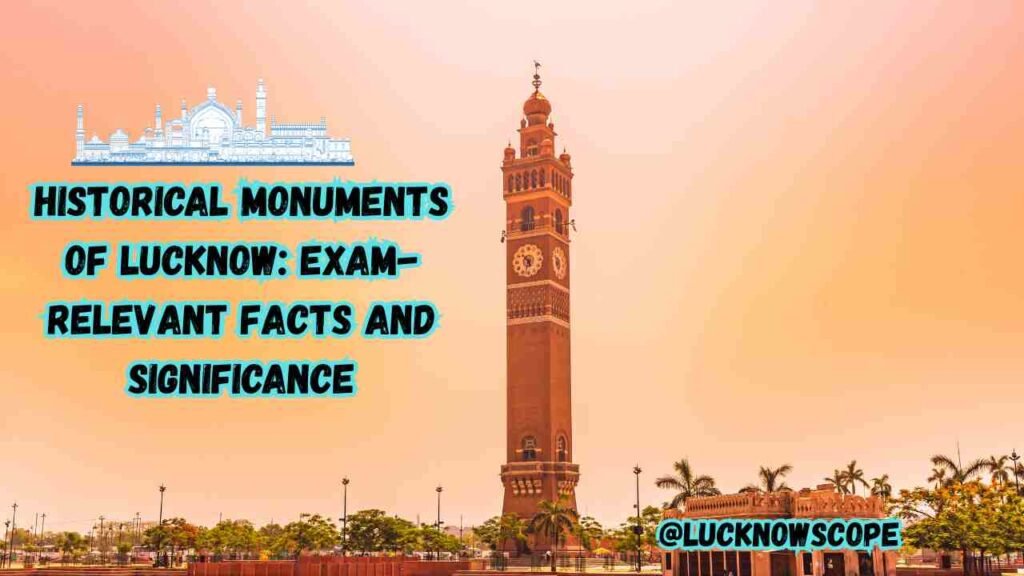
As I sit down to write about the history that shaped Uttar Pradesh, I’m reminded of how deeply connected our present is to the civilizations that flourished here centuries ago. Living in Lucknow, a city that bears the marks of multiple historical periods, I’ve always been fascinated by the layers of history beneath our streets. Today, I want to take you on a journey through two of the most influential periods in UP’s ancient and medieval history: the Mauryan Empire and the Mughal Era. Understanding these connections helps us appreciate not just where Lucknow stands today, but why it stands there at all.
The Mauryan Empire: When UP Was Part of Ancient India’s Greatest Kingdom
The Mauryan Empire (322-185 BCE) represents one of the most significant periods in Indian history, and Uttar Pradesh played a crucial role in this vast territorial expanse. Emperor Ashoka, who ruled from 268-232 BCE, transformed the empire into one that stretched across much of the Indian subcontinent, and UP territories were among its most important regions.
When we talk about the Mauryan period in UP, we’re looking at an era of remarkable administrative efficiency and cultural flourishing. The empire was divided into provinces, and the regions that comprise modern-day UP fell under different administrative centers. The eastern parts, including areas around Varanasi, were strategically important as they connected the empire’s core to trade routes extending toward Southeast Asia. Historical records, including accounts from Megasthenes (a Greek ambassador to the Mauryan court around 302 BCE), provide glimpses into the sophisticated administration of the period.
The Mauryan rulers, particularly Ashoka, were instrumental in spreading Buddhism across these territories. Archaeological evidence suggests that Buddhist monasteries and stupas were constructed throughout UP during this period. For those interested in understanding this connection, the Archaeological Survey of India (ASI) has documented several Mauryan-period sites across UP. The Sarnath archaeological site near Varanasi, though technically in the eastern part of the region, contains remains dating back to the Mauryan period and represents the architectural and religious aspirations of that time.
What fascinates me most about the Mauryan period is how it established a pattern of centralized governance and cultural homogeneity that would influence future empires. The famous Edicts of Ashoka, inscribed on pillars and rocks across his empire, represented an attempt to communicate imperial values directly to subjects. While most surviving edicts are found in other parts of India, the administrative principles they embodied were applied throughout UP territories, creating a sense of unified governance that was revolutionary for its time.
Trade flourished during the Mauryan period. The Gangetic plains of UP, with their fertile soil and access to water transportation, became vital commercial centers. Merchants moved goods along established routes, connecting inland production with coastal ports. For anyone studying this period, references like the works analyzed on the UNESCO World Heritage website and ASI records provide detailed information about Mauryan infrastructure development.
The Transition: From Mauryan to Medieval Periods
After the Mauryan Empire’s decline, UP went through several historical phases—the Sungas, the Guptas, various regional kingdoms, and Delhi Sultanates—before the Mughal period began. Each left its imprint on the landscape and culture. However, the Mauryan legacy of administrative organization and cultural integration never entirely disappeared.
The Mughal Era: A New Transformation of UP Territories
The Mughal Empire (1526-1857) represents perhaps the most visible historical layer we see in contemporary Lucknow and UP. When Akbar consolidated Mughal control in the latter half of the 16th century, he reorganized the empire into administrative units called “subahs” (provinces). UP territories were distributed among several important subahs—Agra, Awadh, and Allahabad being the most significant.
What’s particularly interesting from my perspective as someone living in Lucknow is how the Awadh region developed under Mughal rule, and later as a semi-autonomous region under the Nawabs. The foundation of Lucknow’s prosperity was laid during the later Mughal period when the city began to gain importance as a cultural and administrative center. The Mughal emperors, particularly Akbar (1556-1605), instituted policies of religious tolerance and cultural synthesis that created an environment where diverse communities could coexist—a legacy that still defines Lucknow’s character today.
The administrative infrastructure created by the Mughals was sophisticated. They established a taxation system, maintained records of land holdings, and promoted commerce through standardized weights, measures, and coinage. These systems, documented in historical texts like the Ain-i-Akbari (the administrative chronicle of Akbar’s reign), show how UP’s resources were mobilized to support the empire. The fertile Gangetic plains continued to be the empire’s breadbasket, generating substantial revenue that funded military expansion and cultural projects.
Architecture became a defining feature of Mughal rule in UP. While Agra, with the Taj Mahal, is globally recognized, Lucknow developed its own architectural identity. The Bara Imambara, constructed in 1784 by Asaf-ud-Daulah, showcases the Indo-Islamic architectural style that had evolved over centuries of Mughal and post-Mughal patronage. These structures didn’t exist in isolation—they represented the culmination of architectural traditions that had developed throughout the Mughal period and adapted to local preferences and materials.
Trade and commerce experienced a renaissance during the Mughal period. UP territories, with their position in the Indo-Gangetic plains, became crucial trading hubs. Merchants from Central Asia, Persia, and Europe (after the Portuguese established themselves on the coasts) conducted business in cities like Agra, Lucknow, and Allahabad. This commercial activity wasn’t merely economic—it facilitated cultural exchange, leading to the development of a distinct Indo-Islamic culture that blended Persian, Central Asian, and Indian traditions.
Comparative Insights: Mauryan and Mughal Governance
Both the Mauryan and Mughal empires, despite being separated by over 1,500 years, shared common approaches to governing their vast territories. Both established sophisticated administrative hierarchies, both promoted trade and commerce, and both invested in cultural and religious institutions. However, their religious orientations differed significantly—the Mauryans promoting Buddhism and Brahminism, while the Mughals supported Islam while also accommodating other faiths.
The Mauryan emphasis on direct imperial communication through edicts found its parallel in the Mughal use of administrative records and architectural patronage to communicate state power and values. Both empires understood that controlling vast territories required more than military might; they needed systematic administration and cultural integration.
Legacy in Modern Lucknow and UP
Understanding these historical connections helps us appreciate modern Lucknow and UP in profound ways. The administrative divisions we see today have roots extending back to Mauryan provincial systems. The cultural synthesis visible in Lucknow’s food, language, festivals, and architecture reflects centuries of coexistence between communities—a pattern established during the Mauryan period and developed further during the Mughal era.
The Gomti River, which flows through Lucknow, was as important to ancient merchants as it is referenced in modern discussions about the city’s development. Both the Mauryans and Mughals recognized the importance of water resources and river navigation in their empires’ prosperity.
As an educator, I find it valuable to explain to students that the India we see today—in its administrative structures, in its cultural diversity, in its commercial practices—carries forward legacies from these ancient and medieval periods. The concept of a united India with diverse populations governed by centralized but decentralized administrative systems has roots in both Mauryan and Mughal models.
Conclusion
The Mauryan and Mughal connections to Uttar Pradesh territories represent two great peaks in ancient and medieval Indian history. The Mauryans established templates for empire-building, cultural integration, and administrative efficiency that lasted centuries. The Mughals built upon previous traditions while adding their own architectural, cultural, and administrative innovations. Lucknow, in particular, became a city where these historical influences crystallized into a unique urban culture.
For anyone interested in deepening their understanding of these periods, I recommend exploring archaeological sites through the ASI website (asi.nic.in), reading primary sources about the Mauryan period, and visiting the magnificent structures that Mughal and post-Mughal patronage left behind.
History isn’t merely academic—it’s the foundation upon which our present communities have been built. By understanding our historical connections, we gain deeper appreciation for the places we inhabit and the diverse cultural threads that weave our societies together.
Disclaimer
This article draws information from reputable historical sources including the Archaeological Survey of India (ASI), Wikipedia articles on the Mauryan Empire and Mughal Empire, UNESCO World Heritage documentation, and established historical texts such as the Ain-i-Akbari. While we have endeavored to ensure accuracy, historical interpretation can vary among scholars. If you encounter any inaccuracies or have additional scholarly information to contribute, we welcome your feedback. We will promptly review and correct any errors. For comprehensive academic study on these topics, we recommend consulting the official ASI website (asi.nic.in), university-published histories, and peer-reviewed historical journals. This article is intended as an informative introduction to these historical periods and their connections to Uttar Pradesh territories.