As the Hindu calendar turns a significant page, Uttar Pradesh welcomes the holy month of Jyeshtha — and this year, a rare celestial alignment is making it doubly auspicious, stretching the month across nearly two months and blessing devotees with eight sacred Tuesdays instead of the usual four.
The Arrival of Jyeshtha: Summer’s Most Powerful Month
The Hindu month of Jyeshtha — widely regarded as the most intense and spiritually significant month of summer — has begun in Uttar Pradesh from May 2, 2026. Corresponding broadly to the period between May and June in the Gregorian calendar, Jyeshtha is traditionally associated with the fiercest heat of the Indian subcontinent, and it carries deep religious importance, particularly for devotees of Lord Hanuman.
This year, however, Jyeshtha arrives with a distinction that comes around only once in roughly every 32 months: the presence of Adhik Maas — an extra or intercalary month embedded within the Hindu lunisolar calendar. Because of this rare addition, the month of Jyeshtha in 2026 will not conclude at its usual time. According to the Kashi Panchang, the Jyeshtha month will begin on May 2 and extend all the way to June 29, 2026 — a duration nearly double that of an ordinary Hindu month, and one packed with religious significance for the faithful across the state.
Eight Bada Mangal: A Once-in-a-Generation Blessing
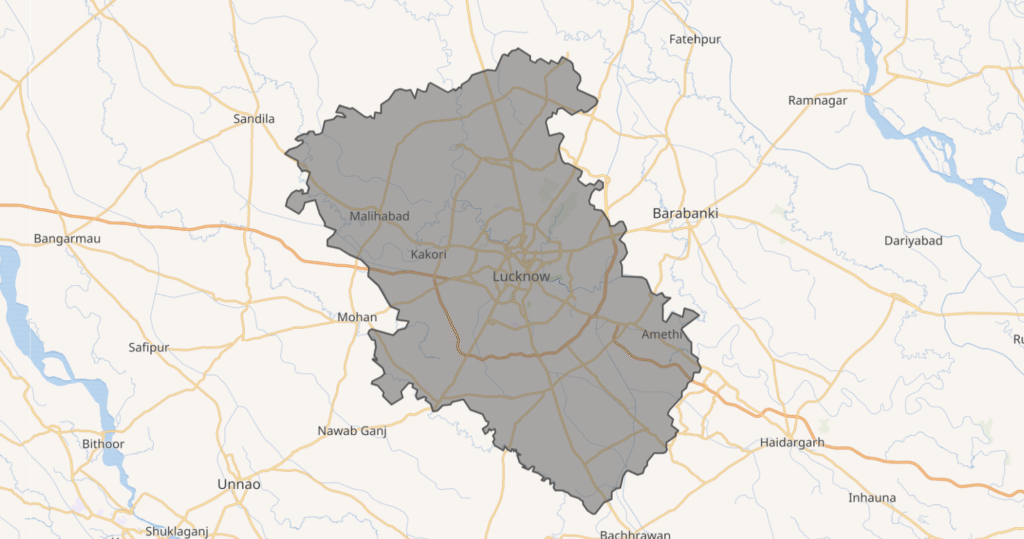
The most celebrated aspect of Jyeshtha in Uttar Pradesh — and particularly in Lucknow, the state capital — is the observance of Bada Mangal, or the “Great Tuesday.” Every Tuesday that falls during the Jyeshtha month is considered a Bada Mangal and is treated as one of the most auspicious days in the Hindu devotional calendar. Hanuman temples across the state become centres of intense religious activity, drawing thousands of devotees who come to offer prayers, seek blessings, and participate in community feasts known as bhandare.
In an ordinary year, Jyeshtha contains four Tuesdays, giving devotees four Bada Mangal celebrations. But 2026 is far from ordinary. Due to the Adhik Maas falling within Jyeshtha this year, there will be a total of eight Bada Mangal Tuesdays, falling respectively on May 5, 12, 19 and 26, and June 2, 9, 16 and 23.
Of these eight, four will be considered “Shuddha Jyeshtha Mangal” — the pure Jyeshtha Tuesdays — falling on May 5 and May 12, and then June 16 and June 23. The remaining four will be “Adhik Jyeshtha Mangal” — the Tuesdays of the extra month — falling on May 19, May 26, June 2, and June 9, during the period of Adhik Jyeshtha Maas which runs from May 17 to June 15.
For devotees, this is an extraordinary windfall. Eight opportunities to observe fasts, perform special worship, participate in community feasts, and seek Lord Hanuman’s divine grace is something that comes perhaps once in a generation. Religious scholars and priests across Lucknow and other major cities of UP are calling this a special year for spiritual merit-making.
Why Does Adhik Maas Occur? The Astronomy Behind the Calendar
To understand why this year’s Jyeshtha is so unusually long, one must appreciate the elegant astronomical reasoning behind the Hindu calendar’s design — a design that has survived thousands of years precisely because of its mathematical sophistication.
Astrologer Jyotishacharya Puneet Varshney explains that every year, the lunar calendar consists of 354 days, while the solar calendar spans 365 days. This creates an annual discrepancy of approximately 11 days between the two systems. To balance and synchronise these two calendars, the Panchang — the traditional Hindu almanac — adds an extra month every 32 months and 16 days. This extra month is known as Adhik Maas, Purushottam Maas, or Malmaas.
The concept is somewhat analogous to the Gregorian calendar’s practice of adding a leap day every four years, but the Hindu method is more expansive and more culturally rich. Rather than silently slipping in a single day, it inserts an entire extra month — and one that carries its own set of religious observances, prohibitions, and opportunities for devotion.
The name Purushottam Maas — literally “the month of the supreme being” — reflects the deep reverence with which this period is held. According to Hindu tradition, this month is especially dear to Lord Vishnu, and acts of charity, devotion, and austerity performed during Adhik Maas are believed to carry multiplied spiritual merit. The name Malmaas (literally “impure month”) reflects a parallel tradition that treats this period as inauspicious for major life ceremonies like weddings, house-warming rituals, or thread ceremonies — though it is simultaneously considered highly auspicious for personal devotion and worship.
Lucknow’s Grand Bhandare Tradition
While Bada Mangal is celebrated with fervour across all of Uttar Pradesh, it is in Lucknow that the tradition reaches its most spectacular and organised expression. The state capital has a unique and deeply embedded culture of observing Bada Mangal with large-scale community feasts — bhandare — where free food is distributed to thousands of people, regardless of caste, creed, or economic background.
In Lucknow, Hanuman temples are decorated and adorned for the occasion, with extensive rituals of shringar (divine dressing), prayers, and other religious ceremonies being conducted alongside large-scale bhandara arrangements that draw huge numbers of devotees and community members.
The scale of Lucknow’s Bada Mangal bhandare is such that the logistics require careful advance planning. Preparations for the bhandare have already gathered pace in the capital, with applications for LPG gas cylinders pouring into the office of the District Supply Officer as organisers plan for large-scale cooking across the city. This logistical detail alone speaks to the enormous scale of community participation that Bada Mangal generates in Lucknow — a city where the tradition blends religious devotion seamlessly with a culture of public generosity and communal harmony.
The bhandare of Lucknow’s Bada Mangal are particularly notable because they draw participants from across the social spectrum. It is common to see affluent business families funding entire feasts, while ordinary neighbourhood committees and mohalla organisations each set up their own cooking stalls, creating a city-wide festival of community service and devotion. With eight Bada Mangal Tuesdays this year instead of four, the scale of charitable activity is expected to be unprecedented.
The Spiritual Significance of Jyeshtha and Hanuman Worship
Worship of Lord Hanuman during the Jyeshtha month is considered exceptionally auspicious and fruitful. Devotees are advised to perform acts of charity and help those in need during this period. Observing fasts on Bada Mangal and engaging in Hanuman worship is believed to dissolve all of life’s difficulties and ensures the continued grace and blessings of Bajrangbali.
The figure of Hanuman holds a special place in the devotional landscape of Uttar Pradesh — and indeed across northern India. Often described as the Sankat Mochan (remover of troubles), Hanuman is worshipped especially during times of hardship, uncertainty, and crisis. His connection to the month of Jyeshtha has historical and mythological roots, and his temples across the state — from the famous Alopi Devi and Sankat Mochan in Varanasi to the beloved Aali Hanuman temple in Lucknow — become the beating heart of community life during this sacred period.
The Sundarkand recitation — the fifth chapter of the Ramayana which narrates Hanuman’s crossing of the ocean and discovery of Sita — is traditionally performed on Bada Mangal, and this year, with eight such Tuesdays available, recitation groups and katha programmes are being organised across the state at an unprecedented frequency.
A Month That Bridges Tradition and Community
What makes Jyeshtha and its Bada Mangal tradition particularly remarkable is the way in which it functions as a bridge between the intensely personal world of devotion and the broadly social world of community life. The bhandare are not merely religious events — they are platforms for social solidarity, occasions where the boundaries between giver and receiver temporarily dissolve, where temples become kitchens, and where streets become dining halls.
For a state as large, diverse, and socially complex as Uttar Pradesh, the Bada Mangal bhandare represent something rare: a tradition in which participation cuts across lines of wealth, community, and background. Rich and poor sit side by side. Volunteers who might be executives or labourers on weekdays become cooks and servers on Bada Mangal Tuesdays. In this sense, the tradition embodies something central to the Bhakti philosophy that has shaped devotional culture across the Gangetic plains for centuries — the idea that true worship expresses itself through service to others.
Looking Ahead: Eight Tuesdays of Grace
As Uttar Pradesh enters the punishing heat of Jyeshtha 2026 — a month already heralded by record-breaking temperatures in cities like Prayagraj, Varanasi, and Agra — the arrival of eight Bada Mangal Tuesdays offers something the summer heat cannot take away: a calendar full of occasions for community, devotion, and hope.
From the first Bada Mangal on May 5 to the final one on June 23, the state’s Hanuman temples will serve as anchors of spiritual life during what promises to be an intense and eventful period. Preparations are already underway, gas cylinders are being booked, marigold garlands are being ordered, and priests are finalising the schedules for prayers and recitations.
For the devout of Uttar Pradesh, the message of this rare, extended Jyeshtha is simple and deeply felt: the divine has offered eight Tuesdays of grace, and not one of them should be wasted.