
By Archana Tyagi
Educator & Writer, Lucknowscope.com
Uttar Pradesh, India’s most populous state, is not just a demographic powerhouse but also a geographical marvel that reflects the incredible diversity of the Indian subcontinent. Spread across approximately 240,928 square kilometers, UP presents a fascinating tapestry of geographical features—from vast alluvial plains to distinct plateau regions. Understanding these geographical features is crucial not only for students preparing for competitive examinations but also for anyone seeking to appreciate how geography shapes the socio-economic fabric of this historically and culturally significant state.
As an educator in Lucknow, I’ve observed how geography directly influences our daily lives—from the crops we grow to the water we access, from the cities we build to the industries we develop. This article aims to provide a comprehensive understanding of Uttar Pradesh’s geographical features, making it relevant for both UPSC, state civil services examinations, and general knowledge enhancement.
Understanding Uttar Pradesh’s Geographical Location
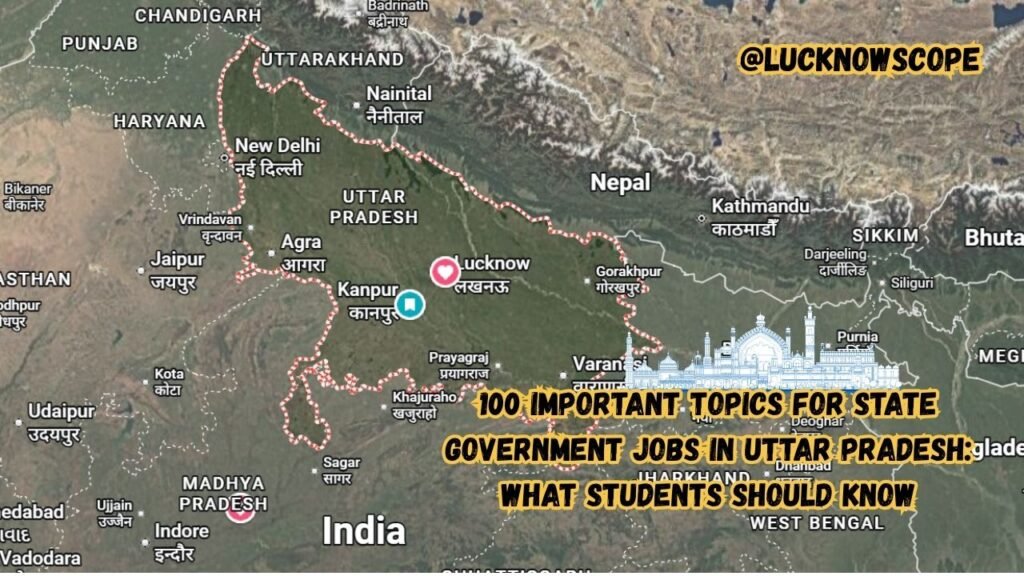
Uttar Pradesh is strategically located in northern India, lying between 23°46′ to 30°27′ North latitude and 77°05′ to 84°39′ East longitude. This positioning places it in the Indo-Gangetic Plain region, one of the world’s most fertile and densely populated areas. The state shares borders with Himachal Pradesh, Uttarakhand, Haryana, Delhi, Rajasthan, Madhya Pradesh, and Bihar, making it a crucial geographical link in India’s northern regions.
Major Geographical Divisions: Plains and Plateaus
1. The Indo-Gangetic Plain
The Indo-Gangetic Plain dominates approximately 60% of Uttar Pradesh’s total area, making it the defining geographical feature of the state. This vast alluvial plain extends from the foothills of the Himalayas in the north to the Vindhyan plateau in the south.
Characteristics of the Plain:
The Indo-Gangetic Plain in UP is characterized by:
- Flat to gently sloping terrain with minimal elevation variations
- Alluvial deposits comprising sand, silt, and clay brought by major river systems over millennia
- Exceptional fertility due to continuous nutrient deposition during seasonal flooding (historically, before modern dam construction)
- Altitude varying from 100 meters in eastern UP to approximately 150 meters in western regions
Subdivisions of the Plain:
For examination purposes, it’s important to understand that the Indo-Gangetic Plain is further subdivided:
- Upper Gangetic Plain: Located in western and central UP (districts like Meerut, Mathura, Agra, Lucknow)
- Middle Gangetic Plain: Extending through central UP with cities like Kanpur and Jhansi as reference points
- Lower Gangetic Plain: In eastern UP (districts including Varanasi, Gorakhpur)
2. The Vindhyan Plateau Region
In the southern part of Uttar Pradesh lies the Vindhyan Plateau, a distinct geographical feature that marks a significant shift from the plains to the plateau environment. This region covers parts of southern UP, particularly in districts like Jhansi, Lalitpur, and Damoh.
Key Features:
- Elevation: Ranges from 300 to 600 meters above sea level
- Composition: Primarily sedimentary rocks (sandstone and limestone)
- Terrain: Characterized by undulating topography with occasional ridges and valleys
- Natural Resources: Rich deposits of limestone and other minerals
- Vegetation: Transition zone vegetation, shifting from fertile plains to semi-arid conditions
The Vindhyan Plateau’s distinct geological character creates a noticeable change in climate, vegetation, and economic activities compared to the plains. The Bundelkhand region, which partially overlaps with the Vindhyan Plateau, is known for its unique cultural identity and different agricultural patterns.
3. The Deccan Plateau (Southern Extension)
While primarily located in the Deccan region, a small extension of the Deccan Plateau enters southwestern UP, particularly in parts of Madhya Pradesh-bordering regions. This area represents a transition zone with characteristics of both the Vindhyan and Deccan formations.
River Systems and Their Geographical Significance
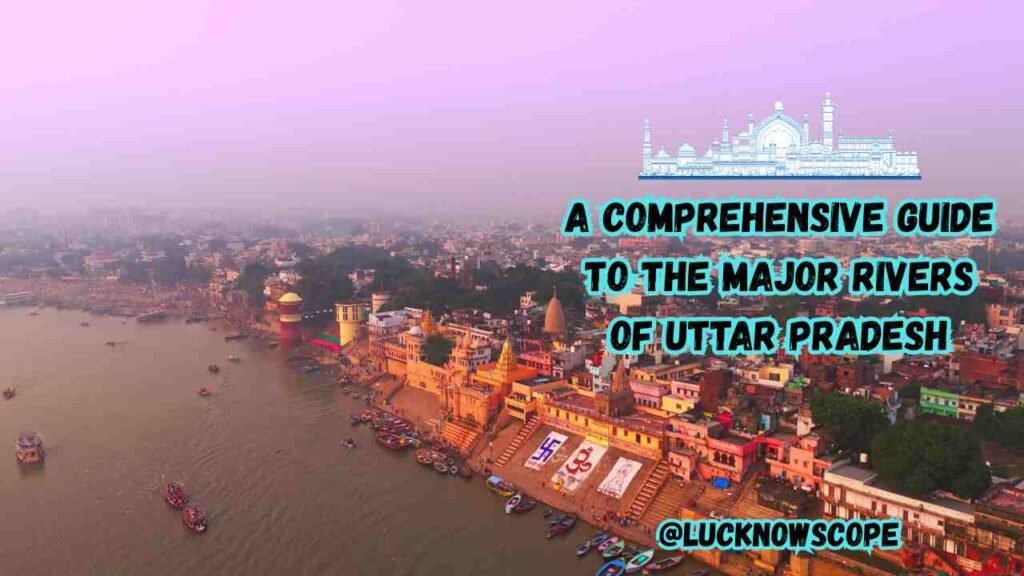
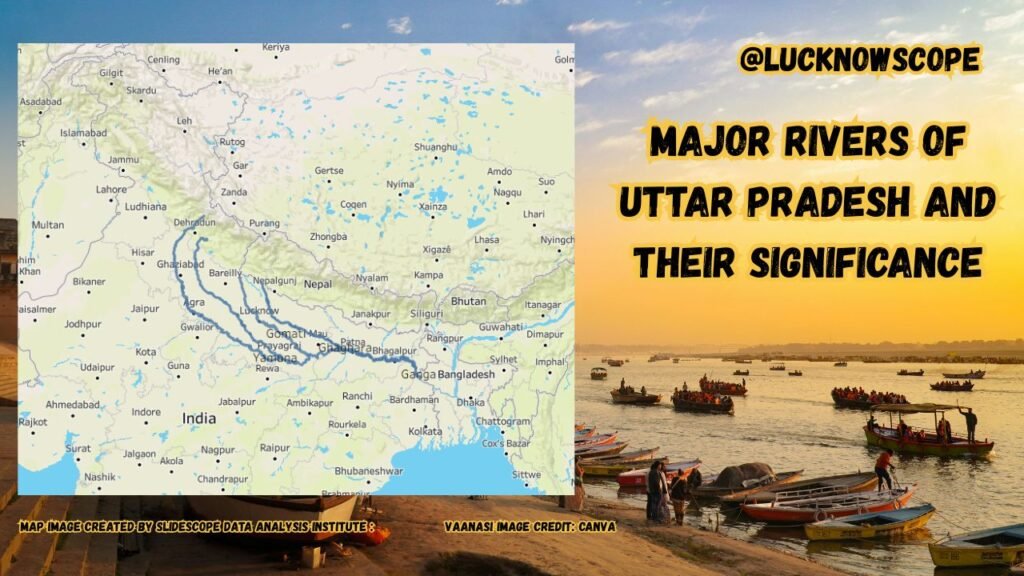
The geography of Uttar Pradesh is intrinsically linked to its river systems, which have shaped the landscape, culture, and economy for thousands of years.
The Ganga River
The Ganga, India’s most sacred and economically important river, flows through the heart of UP for approximately 1,450 kilometers. This “lifeline of North India” is the primary geographical organizing principle of the state.
Key Points:
- Origin: Bhagirathi source in the Himalayas (Uttarakhand)
- Course through UP: Enters at Bijnor and exits at Ballia
- Major tributaries in UP: Yamuna, Gomti, Ghaghra
- Plains formation: The Ganga has created extensive alluvial plains through sediment deposition
The Yamuna River
The Yamuna, Ganga’s most important tributary, creates its own geographical significance in western and central UP.
Characteristics:
- Length in UP: Approximately 950 kilometers
- Valley formation: Creates the Yamuna Valley with distinct geographical features
- Economic importance: Critical for irrigation in Agra, Mathura, and surrounding regions
The Gomti River
A right-bank tributary of the Ganga, the Gomti River is geographically significant for central and eastern UP.
- Origin: Pilibhit district in UP hills
- Cities on its banks: Lucknow, Jaunpur
- Regional importance: Primary water source for Lucknow and surrounding areas
The Ghaghra and Rapti Rivers
These tributaries, particularly important in eastern UP, drain the Himalayan foothills and contribute to the alluvial plain formation in the eastern region.
Soil Characteristics Across Geographical Regions
Understanding soil types is crucial for competitive exams and provides insights into why agriculture thrives in certain areas.
Alluvial Soils (Plains Regions)
- Color: Light to dark brown
- Composition: Sand, silt, and clay in varying proportions
- Fertility: Naturally fertile, especially in regions of regular river inundation
- Agricultural suitability: Excellent for wheat, rice, sugarcane, and other major crops
- Distribution: Covers almost 90% of UP’s cultivated area
Red and Yellow Soils (Plateau Regions)
- Origin: Weathering of metamorphic and igneous rocks
- Characteristics: Less fertile than alluvial soils, slightly acidic
- Suitability: Better for coarse cereals, pulses, and oilseeds
- Found in: Southern plateau districts
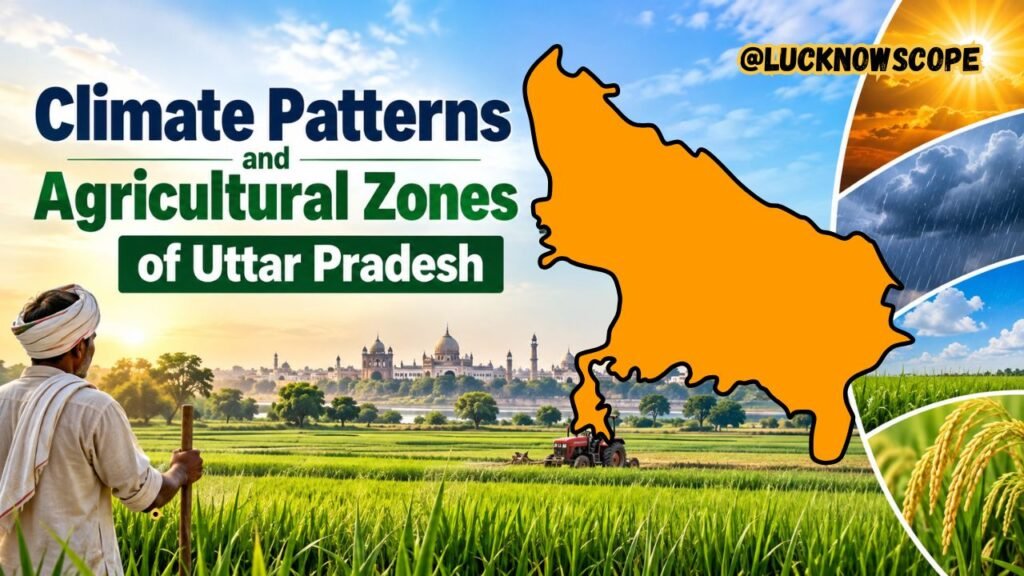
Climate Patterns Related to Geographical Features
Geography directly determines climate patterns across UP:
Northern Plains (Affected by Himalayan Proximity)
- Cooler winters with occasional frost
- Well-distributed monsoon rainfall (75-100 cm annually)
- Example: Lucknow records an average annual rainfall of 86 cm
Western Plains
- Higher temperatures in summer
- Lower rainfall (50-75 cm)
- More continental climate influence
Southern Plateau Region
- Semi-arid to sub-humid climate
- Lower rainfall (60-80 cm)
- Temperature variations due to elevation
Eastern Plains
- Highest rainfall in the state (100-150 cm)
- Monsoonal influence more pronounced
- Higher humidity levels
Geographical Impact on Economic Activities
Agriculture
The fertile Indo-Gangetic Plain supports:
- Wheat production: UP produces approximately 30% of India’s wheat
- Rice cultivation: Major in eastern districts
- Sugarcane: Concentrated in western and central regions
- Cotton and oilseeds: Plateau regions
Industrial Distribution
Geography influences industrial location:
- River access: Kanpur’s development along Ganga for textile industries
- Mineral availability: Limestone industries in southern plateau districts
- Urban centers: Natural growth along plains where resources are accessible
Infrastructure Development
Geographical features determine:
- Road and rail network patterns: Following river valleys and plains
- Urban settlement: Concentrated in plains due to accessibility and resource availability
- Water resource management: Dam and canal construction following river courses
Examination-Relevant Points: Summary
For students preparing for competitive examinations, remember these key geographical facts about Uttar Pradesh:
- Total Area: 240,928 sq km
- Major Plains: Indo-Gangetic Plain (largest portion)
- Plateau Regions: Vindhyan Plateau (southern part)
- Major Rivers: Ganga, Yamuna, Gomti, Ghaghra
- Elevation Range: 100-600 meters approximately
- Soil Types: Predominantly alluvial in plains, red-yellow in plateaus
- State Boundaries: With 8 other states and territories
- Important Coordinates: 23°46′ to 30°27′ North, 77°05′ to 84°39′ East
Conclusion
The geography of Uttar Pradesh represents a fascinating interplay of plains and plateaus, shaped over millennia by powerful river systems. From the fertile Indo-Gangetic Plain that feeds a substantial portion of India’s population to the mineral-rich Vindhyan Plateau, every geographical feature has contributed to UP’s historical significance and contemporary importance.
As someone who has lived in Lucknow for decades, I’ve witnessed how this geography manifests in our daily lives—the monsoon patterns that determine crop cycles, the river systems that sustained our cities, and the plains that allowed civilizations to flourish. For students and knowledge-seekers, understanding these geographical features provides not just examination preparation but a deeper appreciation of how the physical landscape shapes human civilization.
Whether you’re studying for UPSC, state civil services, or simply seeking to understand the regions you inhabit, recognizing these geographical features—the vast fertile plains, the distinctive plateau formations, and the life-giving river systems—is fundamental to comprehending Uttar Pradesh’s role in India’s geography and economy.
Pingback: 100 Important Topics for State Government Jobs in Uttar Pradesh: What Students Should Know - Lucknowscope