By Archana Tyagi
Dear aspiring civil servants and government job seekers of Uttar Pradesh,
After 15 years of teaching and mentoring students in Lucknow, I’ve observed countless young minds pursue government jobs with hope and determination. Over the years, I’ve guided many students through their preparation journey, and today, I want to share a comprehensive roadmap of the 100 most important topics you need to master for Uttar Pradesh state government examinations. Whether you’re preparing for UPPSC, UPSC, or departmental examinations, this guide will help you strategize your study plan effectively.
Understanding the Examination Structure
Before diving into specific topics, let me clarify that Uttar Pradesh conducts various state-level examinations through different commissions. The primary ones include:
- UPPSC (Uttar Pradesh Public Service Commission) – for PCS and other services
- UPSSSC (Uttar Pradesh Subordinate Services Selection Commission) – for lower-level positions
- Department-specific examinations – conducted by individual government departments
Each examination has distinct requirements, but there’s a significant overlap in foundational topics. Understanding this overlap is crucial for efficient preparation.
Part 1: General Studies & Current Affairs (Approximately 25-30 Topics)
Geography and Climate of Uttar Pradesh
Start by developing an intimate knowledge of your own state. This isn’t just about capitals and rivers—it’s about understanding:
- The 75 districts of Uttar Pradesh and their administrative divisions
- Major rivers (Ganga, Yamuna, Indus, Gomti, Betwa) and their significance
- Geographical features, plateaus, and plains
- Climate patterns and agricultural zones
- Natural resources and mineral wealth
- Industrial clusters and Special Economic Zones (SEZs)
I recommend visiting the UP government’s official website (www.up.gov.in) to access authentic state-level data. Create visual maps and mark important cities, geographical features, and administrative headquarters.
History of Uttar Pradesh
Understanding your state’s rich history is both an intellectual and professional requirement:
- Ancient period: Mauryan and Mughal connections to UP territories
- Medieval history: Delhi Sultanate and Mughal architecture
- British colonial period and freedom struggle in UP
- Post-independence development and state reorganization
- Important historical figures from UP (Chandrashekhar Azad, Lala Lajpat Rai, B.R. Ambedkar’s connections)
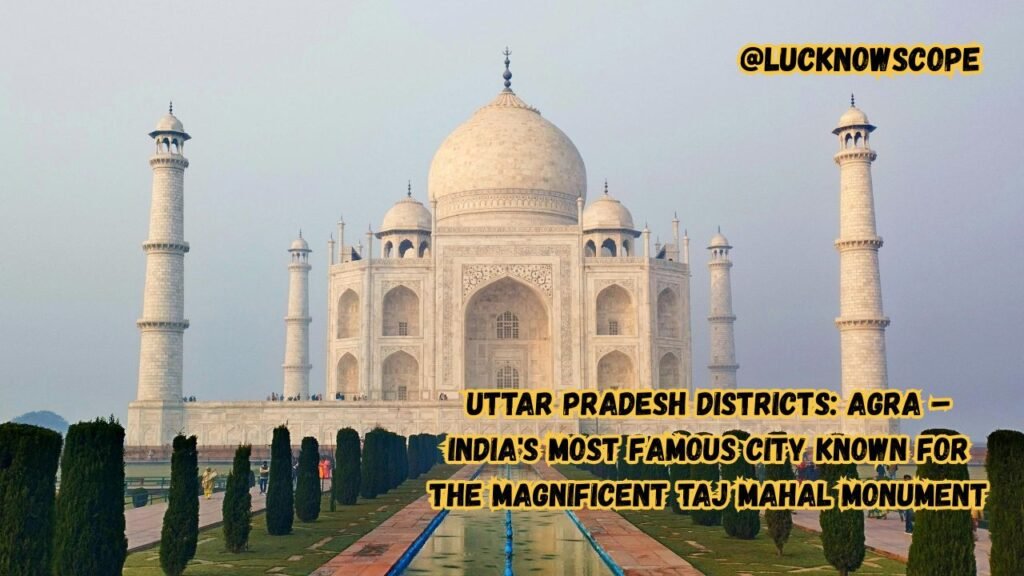
- UNESCO World Heritage Sites in UP (Taj Mahal, Agra Fort, Jantar Mantar, Buddhist sites at Sarnath)
Current Affairs and State Development
This is an ongoing study area that requires daily attention:
- Recent government schemes and their implementation in UP
- State development indices and rankings
- Agricultural policies and crop production data
- Industrial development and business environment
- Infrastructure projects (metro systems, highways, airports)
- Social welfare schemes specific to UP
- Latest government notifications and circulars
Make it a habit to read newspapers daily—particularly sections covering UP news, policy announcements, and development initiatives.
Part 2: Constitutional and Administrative Knowledge (15-20 Topics)
Indian Constitution and Governance
Every government job requires solid constitutional knowledge:
- Basic structure and features of the Indian Constitution
- Fundamental Rights and Fundamental Duties
- Directive Principles of State Policy
- Federal structure: Union, State, and Local governance
- Legislative bodies: Parliament, State Assembly, Lok Sabha representation from UP
- Executive: President, Governor (Chief Executive of states), Chief Minister
- Judicial system and hierarchy of courts
State Administration
Specific to Uttar Pradesh governance:
- State government structure and departments
- Chief Secretary and Principal Secretary roles
- District administration: Collector/District Magistrate responsibilities
- Police hierarchy and administrative controls
- Municipal administration in urban areas
- Panchayati Raj system in rural areas
- Recent administrative reforms in UP
Part 3: Social Studies & Socio-Economic Issues (20-25 Topics)
Demography and Social Structure
- Census data and population statistics of UP
- Literacy rates and educational disparities
- Gender demographics and women’s development
- Scheduled Castes and Scheduled Tribes populations
- Migration patterns and urbanization trends
- Health indicators and life expectancy
Socio-Economic Development
- Poverty line definitions and poverty reduction programs
- Employment scenarios in UP
- Agricultural economy and farmer welfare schemes
- Rural development initiatives
- Education sector challenges and improvements
- Healthcare infrastructure and accessibility
- Social security and pension schemes
Contemporary Social Issues
- Communal harmony and social cohesion
- Women empowerment and safety
- Child welfare and education
- Environmental conservation in UP
- Waste management and pollution control
Part 4: Economics and Finance (10-15 Topics)
State Economics
- UP’s GDP composition and economic sectors
- Agriculture: production, markets, export-import
- Industrial contribution and manufacturing
- Service sector development
- Fiscal resources and state budget allocation
- Public expenditure and efficiency
- GST implementation and its impact on UP
Personal Finance and Banking
- Banking system basics (commercial and cooperative banks)
- Government scheme benefits and subsidy programs
- Loan and credit concepts relevant to common citizens
Part 5: Science & Technology (15-20 Topics)
General Science Concepts
Government examinations often include practical science questions:
- Environmental science and ecology
- Climate change and sustainability
- Renewable and non-renewable energy
- Water management and irrigation
- Agriculture technology and modern farming practices
- Health and sanitation basics
Information Technology and Digital Governance
- E-governance initiatives in UP
- Digital India and Digital Uttar Pradesh programs
- Cybersecurity awareness
- Technological integration in government services
- Recent technological advancements relevant to governance
Part 6: Language and Communication Skills (5-8 Topics)
For most UP government exams, you’ll need:
- Hindi Language: Grammar, composition, comprehension
- English Language: Grammar, vocabulary, comprehension, writing skills
- Communication: Official correspondence, report writing, clarity in expression
As an educator, I emphasize that strong language skills aren’t just exam requirements—they’re essential for government work where you’ll interact with diverse populations.
Part 7: Aptitude and Analytical Skills (Variable Topics)
These aren’t specific knowledge areas but skill-based competencies:
- Numerical Ability: Percentages, ratios, data interpretation, basic mathematics
- Logical Reasoning: Analogies, series completion, coding-decoding
- Analytical Skills: Problem-solving, decision-making scenarios
- General Intelligence: Pattern recognition, spatial reasoning
Regular practice through solved papers is essential here.
Part 8: Indian History and Independence Struggle (10-12 Topics)
National-level knowledge is equally important:
- Ancient Indian history and contributions
- Medieval period and cultural developments
- British colonial rule and economic exploitation
- Indian National Movement and key figures
- Quit India Movement and UP’s role
- Independence and partition history
- Post-independence India’s growth
Part 9: Indian Polity (Advanced Topics) (8-12 Topics)
Beyond basic constitution:
- Amendment procedures and major amendments
- Electoral processes and voting systems
- Federal finance and revenue distribution
- Inter-state relations and dispute resolution
- Recent judicial precedents affecting governance
- Administrative law and regulations
Part 10: Ethics and Values-Based Topics (5-8 Topics)
Increasingly important in modern government examinations:
- Constitutional values and democratic principles
- Administrative ethics and codes of conduct
- Social responsibility and public welfare orientation
- Corruption prevention and transparency
- Professional integrity and impartiality
- Welfare state concept and social justice
Strategic Preparation Tips from My Experience
Over my 15 years of teaching, I’ve developed some strategies that work:
1. Create a Study Schedule
Divide your preparation into phases: foundation building (3-4 months), deep study (4-6 months), and revision (2-3 months). Each topic needs time to settle in your understanding.
2. Use Multiple Sources
Don’t rely on a single book. Cross-reference:
- Standard textbooks
- Official government websites (up.gov.in, uppsc.up.nic.in)
- News sources and magazines
- Previous year question papers
- Online educational platforms
3. Connect Theory to Practice
When studying about irrigation systems, for instance, understand how Yamuna and Ganga management affects UP’s agriculture. This makes learning memorable and practical.
4. Join Study Groups
Learning from peers provides fresh perspectives. In Lucknow’s coaching institutes and universities, group discussions often clarify complex topics better than solo study.
5. Practice Previous Year Papers
These aren’t just for practice—they reveal the examiner’s mindset, question patterns, and emphasis areas. Analyzing papers from the last 5-7 years is invaluable.
6. Develop Current Affairs Habit
Dedicate 30 minutes daily to reading UP-specific news. Maintain a notebook of important events, scheme launches, and policy changes.
7. Write Answers Regularly
For descriptive papers, writing by hand develops clarity and speed. For objective papers, time-bound practice is crucial.
Topic Weightage: Where to Focus
Based on examination patterns, prioritize topics as follows:
| Category | Importance | Study Time |
|---|---|---|
| Uttar Pradesh (Geography, History, Administration) | Very High | 25-30% |
| Constitution & Polity | High | 20-25% |
| Current Affairs & Governance | Very High | 15-20% |
| General Science & Environment | Medium-High | 10-15% |
| Economics & Finance | Medium | 10-12% |
| General Knowledge & History | Medium | 10-12% |
Common Mistakes to Avoid
1. Ignoring Local Knowledge
Students often focus only on national-level topics, neglecting state-specific information that carries significant weightage.
2. Cramming Instead of Understanding
Government exams reward understanding over memorization. A thorough grasp of concepts serves better than rote learning.
3. Neglecting Revision
Studying a topic once isn’t sufficient. Plan regular revision cycles to retain information.
4. Poor Time Management
Many aspirants spend excessive time on interesting topics while neglecting important but less engaging areas. Create a balanced study plan.
5. Ignoring English/Hindi Preparation
Language skills aren’t add-ons—they’re crucial for both written and interview stages.
Final Words of Encouragement
Preparing for government jobs is a marathon, not a sprint. I’ve seen countless students transform their futures through dedicated preparation. The journey teaches discipline, persistence, and deep understanding of your own state and nation.
Remember, these 100 topics aren’t isolated pieces of information—they’re interconnected aspects of understanding your state, your nation, and your potential role in its development. As an educator and mother, I encourage you to approach this preparation with genuine curiosity rather than mere exam-focused thinking.
The government needs dedicated, knowledgeable individuals who understand Uttar Pradesh’s potential and challenges. If you prepare thoroughly with the right mindset, you won’t just clear the examination—you’ll be genuinely ready to serve.
Start today, stay consistent, and believe in your preparation. Lucknow has produced excellent administrators and civil servants, and you can be among them.
Best wishes for your preparation journey!
Archana Tyagi
Teacher & Educator, Lucknow
Contributing Writer, Lucknowscope.com
Note: This guide provides general direction for UP government job preparation. Candidates should refer to official UPPSC, UPSSSC, and concerned department websites for the most current syllabus and examination patterns. Each examination may have varying emphasis on different topics. Consult official notification documents (available at www.uppsc.up.nic.in and www.upsssc.gov.in) before finalizing your study plan.