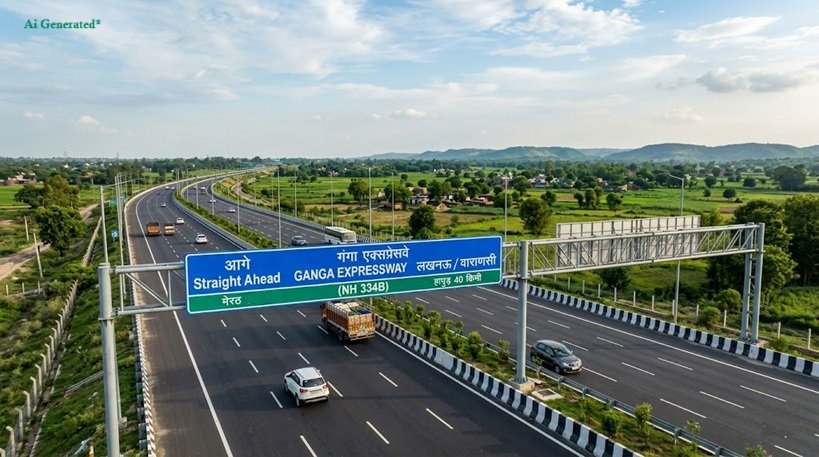
The Yamuna Expressway region has been changing rapidly over the last few years. What was once largely known for its agricultural land and the expressway connecting Greater Noida with Agra is gradually emerging as an important destination for industry, investment, infrastructure and urban development.
One of the latest developments that caught my attention is the acceleration of land acquisition for the proposed Japanese City in Yamuna City.
According to a report published by Jagran on August 23, 2026, the Yamuna Expressway Industrial Development Authority, or YEIDA, has accelerated the process of acquiring land for the proposed Japanese City in Sector 5A. The planned project is expected to cover approximately 500 acres and is being developed as an integrated township with industrial, residential, institutional and commercial components.
As someone from Lucknow who follows the development of Uttar Pradesh closely, I find such projects particularly interesting because they represent a broader transformation taking place across the state. The idea is not simply to create another industrial area. The proposed Japanese City is being planned as a complete ecosystem where businesses, employees and families can live, work and access essential services within the same development.
The project also reflects the growing relationship between Uttar Pradesh and Japanese investors. Following the UP-Japan Investment Meet 2026, interest in the project reportedly increased, with Japanese business delegations visiting the Yamuna City area to assess investment opportunities.
A 500-Acre Japanese Township
The proposed Japanese City is planned across around 500 acres in Sector 5A of Yamuna City.
According to the report, the development will include industrial, institutional, residential and commercial activities. This means that the project is being envisioned as an integrated township rather than simply a cluster of factories.
The idea is to create an environment where Japanese companies can establish operations while their employees and families have access to housing, schools, healthcare facilities and other civic amenities.
This integrated approach is important because industrial development increasingly depends on more than just land and roads. Companies also look for quality infrastructure, reliable connectivity, residential facilities, educational institutions and a comfortable environment for employees.
The project is reportedly being planned along the lines of the Japanese township developed in Neemrana, Rajasthan.
For Yamuna City, such a development could potentially create a new model of industrial urbanization in the region.
Land Acquisition Has Reached 60 Percent
Perhaps the most significant update in the report is the progress being made in land acquisition.
YEIDA has reportedly completed the purchase of around 300 acres out of the approximately 500 acres planned for the Japanese City. This represents roughly 60 percent of the required land.
The remaining land is being pursued through direct communication with farmers.
YEIDA has also released a list of farmers from Govila village and invited objections within 15 days. Once those objections are addressed, the authority plans to complete the remaining land-purchase process.
This is an important stage for any large infrastructure project.
Land acquisition can often be one of the most complicated parts of development, particularly when agricultural land and multiple landowners are involved. Direct communication with farmers can therefore play an important role in ensuring that the process moves forward smoothly.
The fact that more than half of the planned land has already been acquired indicates substantial progress.
Why the Japanese City Is Important
The significance of the project goes beyond the 500 acres of land on which it will be developed.
The larger objective is to create a dedicated ecosystem that can attract Japanese companies and encourage Japanese investment in the Yamuna Expressway region.
A concentrated industrial cluster can offer several advantages.
Companies operating within the same ecosystem can benefit from shared infrastructure, better connectivity and proximity to suppliers and service providers. At the same time, employees can benefit from residential and social infrastructure located close to workplaces.
For the local economy, this could mean employment opportunities and increased demand for supporting businesses.
When a large industrial ecosystem develops, it generally creates opportunities beyond the primary companies. Transport providers, maintenance services, restaurants, retail businesses, professional services, educational institutions and other local enterprises can also benefit from increased economic activity.
This is why projects such as the Japanese City need to be viewed from a wider perspective.
Japanese Businesses to Get Priority
According to the Jagran report, Japanese entrepreneurs will receive priority within the proposed township.
The objective is to create a dedicated cluster for Japanese investment. This is particularly relevant because Japanese businesses have already shown interest in the Yamuna City region.
The recent UP-Japan Investment Meet 2026 reportedly helped generate greater interest in the project. Representatives of Japanese business groups visited Yamuna City to examine investment possibilities.
The authority has also invited Japanese entrepreneurs to establish units in the proposed development.
For Uttar Pradesh, attracting international businesses can have a wider impact. Foreign investment can bring capital, technology, management practices and new employment opportunities.
It can also strengthen connections between local businesses and international supply chains.
The Connection With Noida International Airport
The location of the proposed Japanese City is another important factor.
Yamuna City is developing rapidly around the emerging Noida International Airport and the wider Yamuna Expressway industrial region. This is gradually changing the economic importance of the area.
An international airport can provide businesses with faster access to domestic and international markets. For multinational companies, proximity to aviation infrastructure can be an important consideration when selecting locations for manufacturing, logistics or regional offices.
The combination of the expressway, airport, planned industrial areas and new urban infrastructure is therefore creating a broader development ecosystem around Yamuna City.
The Japanese City could become one part of this much larger transformation.
Opportunities for Employment
Whenever I read about a major industrial project, one of the first questions that comes to my mind as an educator is: What opportunities will it create for young people?
A project of this scale could create direct and indirect employment opportunities as the industrial ecosystem develops.
Direct employment could emerge within manufacturing and other businesses operating in the township. Indirect opportunities could develop through logistics, hospitality, retail, education, healthcare, construction, maintenance and professional services.
This could be particularly important for young people in the surrounding region.
However, employment opportunities will depend on the companies that eventually establish operations, the industries they represent and the skills they require.
This is where education and skill development become extremely important.
Young people preparing for careers in manufacturing, engineering, technology, logistics, finance and management will need industry-relevant skills to take advantage of future opportunities.
Why Skill Development Will Matter
As a computer teacher, I strongly believe that infrastructure development and education must move together.
Building an industrial township is only one part of creating an economic ecosystem. The availability of skilled workers is equally important.
If Japanese companies establish manufacturing and technology-oriented operations in the region, they may require employees with technical, engineering, management and digital skills.
This creates an opportunity for educational institutions and training organizations in Uttar Pradesh to prepare students accordingly.
Skills such as computer literacy, data analysis, automation, programming, engineering technology, supply-chain management and professional communication could become increasingly valuable.
The development of the Japanese City could therefore influence not just employment but also the type of skills young people choose to acquire.
A New Chapter for Yamuna City
Yamuna City has already been attracting attention because of its large-scale development plans.
The Japanese City adds another dimension to that growth.
Instead of development happening randomly across different locations, the creation of dedicated clusters can help organize economic activity. A Japanese-focused industrial township could provide a recognizable destination for companies looking for an established ecosystem in Uttar Pradesh.
The planned residential and institutional components could also make the project more attractive to employees and their families.
This is particularly important for international businesses. Employees relocating to a new region need more than a workplace. They need homes, schools, healthcare and everyday services.
The integrated nature of the proposal therefore makes it more ambitious than a conventional industrial park.
Challenges and the Road Ahead
At the same time, it is important to look at the project realistically.
Land acquisition must be completed smoothly, and the concerns of affected landowners need to be addressed fairly and transparently.
Infrastructure also needs to develop alongside industrial investment. Roads, utilities, public transport, water supply, healthcare, schools and other civic services will all be important for the success of a large township.
Most importantly, investment interest needs to translate into actual businesses and long-term economic activity.
The current land-acquisition progress is encouraging, but the ultimate success of the project will depend on implementation.
The reported target is to bring the project to the ground by the end of 2026.
That makes the coming months particularly important.
What This Could Mean for Uttar Pradesh
From a broader perspective, the Japanese City represents Uttar Pradesh’s ambition to attract international investment and develop specialized industrial ecosystems.
The state has been actively seeking foreign investment and strengthening infrastructure around major economic corridors.
Yamuna City is particularly significant because several major projects are developing in the same broader region.
If these initiatives progress together, the area could become an important economic destination in North India.
For Lucknow residents like me, developments in other parts of Uttar Pradesh are worth following closely. The growth of one region can influence the entire state’s employment market, infrastructure network and business environment.
The emergence of Yamuna City as an industrial and investment hub could eventually create opportunities for professionals and businesses from cities across Uttar Pradesh.
Final Perspective
When I look at the proposed Japanese City, I see more than a 500-acre project.
I see an example of how Uttar Pradesh is attempting to build a new kind of economic ecosystem — one where industry, housing, education, healthcare and commercial activity can exist together.
The reported completion of approximately 60 percent of land acquisition is an important milestone. The remaining process, particularly consultation with farmers and resolution of objections, will be equally important.
The interest shown by Japanese businesses is another encouraging sign.
But ultimately, the real measure of success will be what happens after the land is acquired.
Will companies establish operations? Will local young people receive employment opportunities? Will supporting businesses grow? Will the township develop into a comfortable place for families as well as a productive industrial destination?
These are the questions that time will answer.
For now, however, the acceleration of land acquisition signals that the Japanese City is moving closer to becoming a reality.
As someone who has watched Lucknow and Uttar Pradesh change over the years, I find such developments a reminder that our state is no longer looking only toward its traditional strengths. It is increasingly preparing itself for international business, advanced infrastructure and new forms of economic growth.
The proposed Japanese City could become an important part of that journey.
And if the project is implemented with careful planning, fair land processes, strong infrastructure and adequate attention to skills and local employment, it could become much more than an industrial township.
It could become a bridge between Uttar Pradesh and Japan — and a new chapter in the economic story of the Yamuna region.
Reference: https://investup-japanvisit.org.in/
Disclaimer
Disclaimer: This article has been prepared for informational and educational purposes based on publicly available reports and information available at the time of writing. The details regarding the proposed Japanese City, land acquisition, investment, infrastructure and future development may change as the project progresses. Lucknowscope.com does not independently guarantee the accuracy, completeness or future implementation of any project-related announcement. Readers should refer to official government authorities and verified sources for the latest information before making any investment, business, property or financial decision.