When we talk about the history of Lucknow, our conversations usually begin with magnificent monuments, Nawabi architecture, famous markets, traditional food and the city’s celebrated tehzeeb. But there is another part of Lucknow’s history that deserves equal attention: its educational heritage.
Lucknow has been home to important educational institutions for well over a century. Some of these schools were established during the 19th century and have witnessed enormous changes in the city around them. They have seen the transition from colonial rule to Independence, the development of modern India, changing educational systems, new technologies and generations of students walking through their gates.
As someone who has spent more than 15 years working as a computer teacher, I have always believed that schools are much more than buildings where children attend classes. A school becomes part of the identity of a city. Generations of students pass through its classrooms, teachers leave their influence on young minds, and memories become attached to corridors, playgrounds, assemblies and annual functions.
Lucknow is particularly fortunate in this regard.
Some of the city’s oldest schools were established when modern formal education was still developing in India. Their histories therefore tell us something about how education itself evolved in Lucknow.
In this article, I am looking at five of the city’s oldest school-level institutions, based on their documented foundation dates. It is worth noting that rankings of the “oldest schools” can vary depending on whether one counts institutions that later evolved into colleges, institutions that changed their original form, or schools that have experienced changes in campus and administration. Therefore, rather than presenting this as an absolute official ranking, I am focusing on five historically significant institutions whose 19th-century origins are well documented.
The five institutions are La Martiniere College, Centennial Higher Secondary School and College, La Martiniere Girls’ College, Aminabad Inter College and Government Jubilee Inter College.
Their stories are not simply about old buildings. They are stories about education, social change, discipline, opportunity and generations of Lucknow’s students.
1. La Martiniere College – Founded in 1845
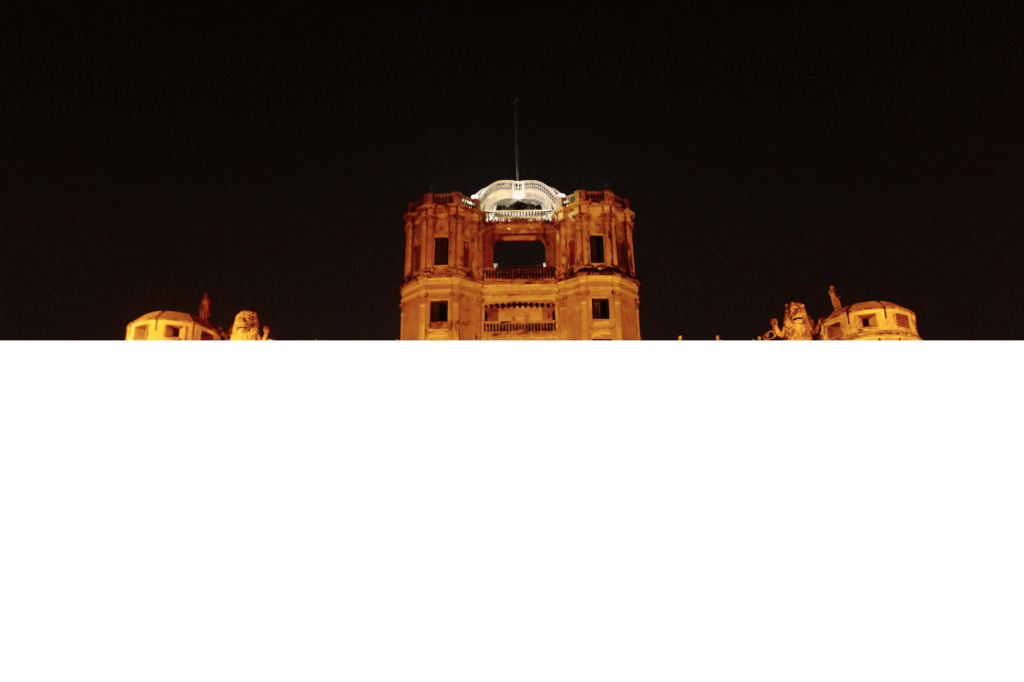
Image credit: By Ahmad Faiz Mustafa – Own work, CC BY-SA 3.0, https://commons.wikimedia.org/w/index.php?curid=28519979
When discussing historic schools in Lucknow, it is almost impossible not to begin with La Martiniere College.
Established in 1845, La Martiniere College is among the city’s most historically significant educational institutions. The school was established in accordance with the will of Major General Claude Martin, the French-born soldier and administrator whose legacy is closely connected with several educational institutions in India and beyond.
The official history of the college confirms that La Martiniere College was established in 1845. Its famous Constantia campus is housed in a heritage building whose construction began in 1796. The founder, Claude Martin, is buried in a crypt beneath the building.
For anyone interested in architecture and history, Constantia is almost as fascinating as the educational institution itself. It does not look like a conventional school building. Its European architectural influences, grand scale and distinctive features make it one of Lucknow’s most recognizable historic structures.
What makes La Martiniere even more unusual is its connection with the events of 1857.
The college has the rare distinction of having received royal battle honours for its role during the defence of Lucknow during the Indian Rebellion of 1857. This gives the institution a place in military as well as educational history.
Over the decades, the college has continued to evolve while retaining its historical character. Today, it operates academic campuses for different age groups and is affiliated with the Council for the Indian School Certificate Examinations.
In October 2025, the institution marked 180 years of La Martiniere College in Lucknow, highlighting just how extraordinary its educational continuity has been.
As a teacher, I find the longevity of this institution particularly interesting. A school that has educated generations of children across almost two centuries has effectively become a living archive of Lucknow.
Students have changed. Technology has changed. Teaching methods have changed. But the basic purpose of education remains.
That is perhaps the greatest legacy of La Martiniere College.
2. Centennial Higher Secondary School and College – Founded in 1862
The second institution on our list has a fascinating and somewhat less widely known history.
Centennial Higher Secondary School and College traces its origins to 1862. According to contemporary reporting by the Times of India, it began as a small school in Husainabad in Lucknow and was established by Reverend J.H. Messmore, described as a pioneer educationist and missionary in the city.
This places its origins more than 160 years in the past.
The institution’s story is particularly interesting because it shows how education in Lucknow developed from relatively small beginnings. A school that started as a modest educational establishment eventually became a recognized secondary institution serving generations of students.
Centennial’s history also reminds us that educational institutions do not always have the grand architecture associated with historic buildings. Their true importance lies in the generations of students they educate.
The school came into public attention in 2022 because of a dispute concerning its historic campus in Golaganj. Teachers and students returning after the summer vacation found that a private school had occupied the premises, leading to significant concern among the school’s community. Contemporary reporting described the institution as a 140-year-old government-aided school at that time.
The matter was subsequently addressed, and classes resumed on the historic campus after officials intervened.
For me, this episode demonstrates something important about heritage.
We often think of heritage as monuments, palaces and old gates. But an old school is also heritage. Its classrooms contain memories, its registers contain generations of names, and its teachers become part of the story of a city.
Centennial’s survival therefore matters not only to its students and teachers but also to Lucknow’s educational history.
It represents an era when organized school education was gradually expanding and becoming an important part of social development.
3. La Martiniere Girls’ College – Founded in 1869
If La Martiniere College represents one important chapter in Lucknow’s educational history, La Martiniere Girls’ College represents another — the gradual expansion of formal education for girls.
La Martiniere Girls’ College was established in 1869 at the Moti Mahal premises with fewer than 100 students and staff. The institution’s official history records that the school was founded by Mrs. Abbott and initially operated under the wider administrative connection of the boys’ institution.
The institution later moved to Khursheed Manzil in 1871 after the government provided the property and surrounding land to the La Martiniere Trust for the purpose of operating a girls’ school.
When we look at this history from today’s perspective, it is easy to underestimate how significant such an institution was.
Girls’ education has become an ordinary and essential part of modern Indian society, but in the 19th century, access to formal education for girls was far more limited.
The establishment of a dedicated girls’ educational institution therefore represented an important development.
Over time, La Martiniere Girls’ College grew considerably. Its official history now records thousands of students and a large teaching and support staff, while the institution continues to provide day and boarding education.
The school is affiliated with the Council for the Indian School Certificate Examinations.
What I particularly appreciate about the story of La Martiniere Girls’ College is the connection between tradition and changing opportunities for women.
A school founded in the 19th century continues to educate girls in a world that looks completely different from the one in which the institution began.
Students today learn subjects and skills that the founders could hardly have imagined — computer science, digital technology, modern sciences and global communication.
Yet the underlying purpose remains the same: education as a means of developing confident, capable individuals.
As a computer teacher, I find this transition especially meaningful.
Education has changed enormously, but its ability to expand possibilities remains just as powerful.
4. Aminabad Inter College – Founded in 1887
Aminabad Inter College is one of the most important names in Lucknow’s municipal educational history.
The official website of the institution states that it was established on October 10, 1887, as Aminabad Municipal A.B.B. School. It was initially a municipal school and later developed into a high school and eventually an intermediate college.
The institution received high school status in 1913 during the tenure of principal Beni Prasad Bhatnagar. It was upgraded to intermediate level in 1947, the year India became independent, during the tenure of principal Baijnath Singh.
This timeline makes Aminabad Inter College particularly interesting because the institution grew alongside major changes in India’s history.
It began during the colonial period.
It expanded before Independence.
It became an intermediate college at the moment India became a free nation.
And it continues to serve students today.
That is a remarkable journey.
The college is operated by the Lucknow Municipal Corporation, and its long history is closely associated with the educational development of the old city.
In 2026, another significant chapter began when the institution started admitting girls for the first time in its 139-year history. Contemporary reports stated that students from Classes 6 to 12 could now be admitted regardless of gender.
I find this development particularly meaningful.
A school founded in 1887 is adapting to the educational expectations of the 21st century. Its story shows that preserving history does not mean refusing to change.
A heritage institution can remain proud of its past while opening its doors wider for future generations.
That, in my opinion, is exactly how educational heritage should work.
5. Government Jubilee Inter College – Founded in 1887
Government Jubilee Inter College is another landmark in Lucknow’s educational history and shares the year 1887 with Aminabad Inter College.
The institution’s history goes back to the establishment of Jubilee High School in 1887. Recent reporting by Amar Ujala records that a proposal for establishing a quality school in Lucknow was initiated in 1885 through Munshi Nawal Kishore, and the proposal was accepted on March 24, 1887. The institution was subsequently established as Jubilee High School.
The name “Jubilee” reflected the celebrations associated with Queen Victoria’s reign at the time.
The institution later developed into Government Jubilee Inter College.
Its history is particularly interesting because it reflects the changing role of government education in Lucknow.
The college has continued to serve students across generations and has also undergone modernization. In 2026, plans were reported to transform the historic institution with smart-school facilities, including modern computer-related learning resources.
This is a wonderful example of how an old institution can embrace new educational requirements.
When I think about this as a computer teacher, I find the transition especially encouraging.
Imagine a school that began in the 19th century now introducing students to modern computer hardware and digital learning. The contrast tells us how dramatically education has changed.
But it also demonstrates continuity.
The building, administration and curriculum may evolve, but the fundamental objective remains the same — giving young people the knowledge and skills they need to build their future.
Why These Old Schools Matter to Lucknow
There is something special about studying the history of old schools.
A monument can tell us about architecture. A palace can tell us about rulers. A market can tell us about commerce.
But a school tells us about people.
These five institutions have collectively educated generations of children during periods of enormous social and political change.
They witnessed the final decades of colonial rule.
They existed through the upheaval of 1857 and its aftermath.
They saw the emergence of new educational systems.
They continued through India’s Independence.
And they have now entered an age dominated by computers, smartphones, artificial intelligence and digital learning.
That continuity is extraordinary.
As a teacher, I believe education should never be viewed only through examination results. A school contributes to society in many different ways. It develops discipline, confidence, communication skills, curiosity and a sense of responsibility.
Historic schools have another responsibility: they preserve institutional memory.
Every generation that passes through their gates becomes part of a much longer story.
A Living Educational Heritage
One thing I would like readers to remember is that these schools should not be viewed simply as old institutions.
They are living institutions.
Their students are still attending classes. Teachers are still preparing lessons. Exams are still being conducted. Sports grounds are still being used. Parents are still waiting for admission decisions. Young students are still worrying about homework and examinations.
That is what makes educational heritage different from a ruined monument.
A historic school is history that is still happening.
And perhaps that is why these institutions deserve our attention.
Whenever we discuss the heritage of Lucknow, we should remember that our city’s history is not confined to monuments such as Bara Imambara, Rumi Darwaza or the Residency.
It also lives inside classrooms.
It lives in old school registers.
It lives in photographs of former students.
It lives in teachers’ memories.
And it lives in the stories that parents tell their children about their own school days.
For a city as old and culturally rich as Lucknow, this educational heritage is something we should preserve and celebrate.
The five institutions discussed here — La Martiniere College, Centennial Higher Secondary School and College, La Martiniere Girls’ College, Aminabad Inter College and Government Jubilee Inter College — each represent a different chapter in that story.
Some began as schools for particular communities or purposes. Some grew from small beginnings. Some changed their status over time. Some have embraced modern technology and new approaches to education.
But all share one remarkable quality: they have endured.
And as someone who has spent much of her professional life inside classrooms, I find that endurance deeply inspiring.
Buildings change. Technology changes. Textbooks change. Even the way children learn changes.
But the need for good education never disappears.
That is perhaps the most important lesson these historic schools of Lucknow continue to teach us.
Their oldest lesson is also their simplest one: a city invests in its future every time it educates its children.