Introduction to Agriculture in Uttar Pradesh
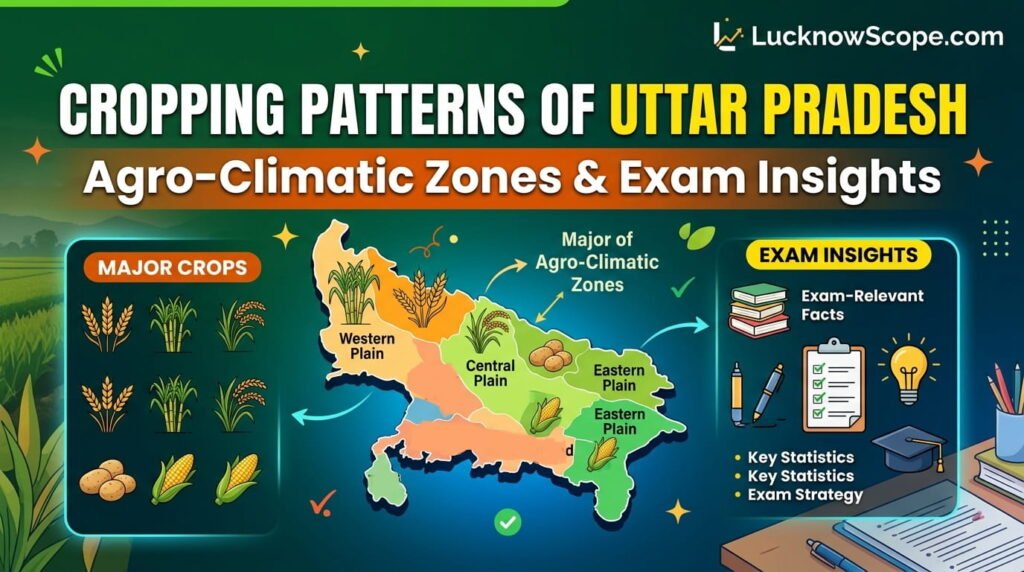
Agriculture plays a pivotal role in the economy of Uttar Pradesh, which is recognized as one of India’s principal agricultural states. With a diverse array of crops and a substantial agricultural workforce, Uttar Pradesh significantly contributes to the country’s food production and rural employment. The state is primarily known for its production of wheat, sugarcane, rice, and pulses, making it a crucial player in India’s agricultural landscape.
The state encompasses a variety of climatic zones, ranging from arid regions to fertile river basins, which supports a wide spectrum of crops. This diversity allows Uttar Pradesh to produce a significant quantity of both food and cash crops, contributing to the overall agricultural output of India. The agricultural sector not only supports the livelihoods of millions but also impacts various allied sectors such as agro-processing and marketing.
However, the agricultural landscape of Uttar Pradesh faces numerous challenges that threaten its productivity and sustainability. Issues such as soil degradation, water scarcity, and fluctuating climate conditions significantly hinder agricultural progress. Addressing these challenges is vital for maintaining and enhancing the agricultural productivity of the state. Sustainable agricultural practices and innovative farming techniques are necessary to improve soil health, optimize water usage, and adapt to climate variations.
In summary, agriculture in Uttar Pradesh is integral to both the state and national economy. By identifying and addressing the prevailing issues within the agricultural sector, stakeholders can work towards enhancing productivity and ultimately improving the livelihoods of farmers across the state.
Soil Quality Challenges
Uttar Pradesh, being one of the largest agricultural states in India, faces significant challenges regarding soil quality, which directly impacts agricultural productivity. One of the primary concerns is soil depletion, where continuous cropping without adequate replenishment of nutrients leads to a decline in soil fertility. This depletion is further exacerbated by practices like monoculture, which diminish the diversity of nutrients available in the soil, making it less resilient to pests and diseases.
Soil erosion is another pressing issue, particularly in regions where intensive farming practices dominate. The loss of topsoil, essential for plant growth, has been accelerated by both water and wind erosion. As rainfall patterns become erratic, flash floods wash away the nutrient-rich upper layer, thereby threatening the sustainability of agricultural practices. Farmers are often left with degraded land that is less capable of supporting crops, leading to reduced yields over time.
In addition to erosion, soil salinity poses a severe threat to agricultural output in Uttar Pradesh. Irrigation practices, especially when groundwater is not managed effectively, can contribute to the accumulation of salts in the soil, rendering it less fertile. High salinity levels adversely affect crop growth and reduce the overall productivity of farmlands. It is crucial for farmers to adopt improved irrigation techniques and choose more tolerant crop varieties to mitigate this issue.
Lastly, the over-reliance on chemical fertilizers can lead to soil degradation. Although they provide quick nutrient fixes, such fertilizers can alter the soil’s pH and disrupt its microbial community, which is vital for nutrient cycling. Therefore, the implementation of sustainable soil management practices is imperative. These practices include crop rotation, the use of organic amendments, and conservation tillage, all of which can help restore soil health and enhance agricultural productivity in Uttar Pradesh.
Water Scarcity and Management
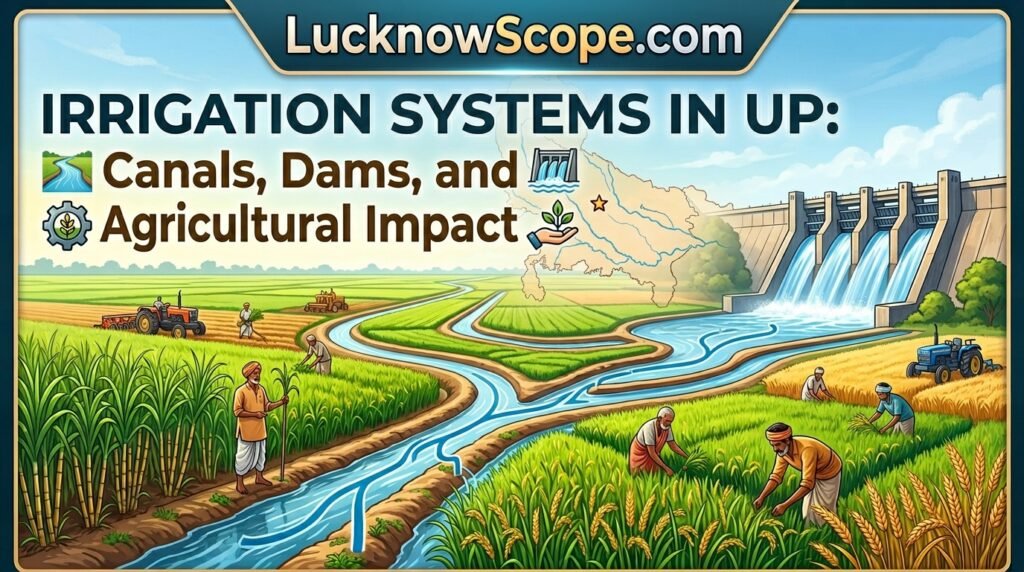
Water scarcity is a pressing issue in Uttar Pradesh, significantly impacting agricultural productivity and the livelihoods of farmers. The state primarily relies on three sources for irrigation: surface water, groundwater, and canal systems. However, these sources are under tremendous pressure due to increasing population demands, climate variability, and inefficient irrigation practices.
Groundwater serves as a crucial resource, accounting for approximately 60% of the total irrigation needs in Uttar Pradesh. The over-extraction of groundwater has led to alarming declines in water levels across various regions. Farmers often resort to deep tubewells, resulting in unsustainable long-term impacts on the aquifer systems. The situation is exacerbated by climate change, which alters precipitation patterns and leads to erratic rainfall, further straining water availability.
To address the issues of water scarcity, effective water management practices are essential. Efficient irrigation systems such as drip and sprinkler irrigation can reduce water waste and maximize crop yield per unit of water consumed. Additionally, rainwater harvesting techniques can be employed to capture and store rainwater for use during dry spells. Educational initiatives aimed at promoting water conservation strategies among farmers can also play a crucial role in managing water resources more sustainably.
The government’s initiatives to enhance irrigation infrastructure and promote sustainable practices are commendable but require sustained investment and community engagement. The integration of modern technologies like remote sensing and precision agriculture can aid in monitoring water use and ensuring timely irrigation. Ultimately, collaborative efforts involving government, community stakeholders, and farmers are vital for devising comprehensive strategies to mitigate water scarcity challenges.
Productivity Concerns in Agriculture
Productivity issues in agriculture are critical challenges that farmers in Uttar Pradesh face. A significant contributor to low crop yields is the reliance on outdated farming techniques. Many farmers continue to use traditional methods that have proven to be less effective in modern agricultural contexts. These techniques often do not leverage advancements in technology that could enhance efficiency and output. By not adopting innovative practices such as precision agriculture, farmers may forfeit potential gains in productivity, leading to diminished agricultural performance across the region.
Pest management is another significant concern affecting agricultural productivity in Uttar Pradesh. The prevalence of pests can severely reduce crop yields if not adequately controlled. Farmers often resort to over-reliance on chemical pesticides, which may lead to resistance issues over time. Integrated Pest Management (IPM), which promotes ecological balance and utilises various control strategies, could be a beneficial alternative. Implementing IPM can not only enhance crop resilience but also help in maintaining healthy soil ecosystems.
The interrelation of soil health and water availability further complicates the productivity landscape. Soil degradation, often due to over-farming and inadequate replenishment, hampers crop growth potential. Water scarcity, exacerbated by inconsistent rainfall patterns and inefficient irrigation systems, likewise affects productivity. This scenario underscores the necessity for sustainable farming practices that prioritize both soil health and effective water management.
To tackle these productivity challenges, farmers and policymakers must consider viable solutions. Training and education programs focused on modern agricultural techniques, pest management strategies, and sustainable practices can equip farmers with the knowledge required to improve their crop yields. Moreover, investment in irrigation infrastructure and soil conservation methods will be essential in enhancing agricultural productivity, leading to improved economic conditions for farmers and ensuring food security in the region.
Climate change is emerging as a significant challenge to agriculture worldwide, and Uttar Pradesh, a vital agricultural state in India, is no exception. The region has been experiencing changing weather patterns, characterized by unpredictable rainfall, prolonged droughts, and more frequent extreme weather events. These climatic shifts are severely impacting the agricultural practices and productivity that sustains the livelihoods of millions of farmers.
One of the most concerning aspects of climate change is its effect on temperature. Increased temperatures can lead to heat stress in crops, resulting in reduced yields and affecting the quality of produce. For instance, staple crops such as wheat and rice are highly sensitive to temperature fluctuations. Higher temperatures during crucial growth stages can weaken these crops, which ultimately threatens food security in the region.
Additionally, irregular rainfall patterns exacerbate water scarcity issues faced by farmers. The reliance on monsoon rains for irrigation means that any variation can lead to significant challenges in crop production. Farmers may find themselves facing either waterlogging during excessive rains or drought conditions during dry spells, which ultimately leads to compromised crop health and reduced agricultural output.
Moreover, extreme weather events, such as floods and storms, have become more frequent and intense due to climate change. These events not only destroy crops and agricultural infrastructure but also disrupt the planting and harvesting schedules, further diminishing productivity. The inability to predict weather patterns accurately also adds to the insecurity faced by farmers, as they struggle to adapt to rapidly changing climatic conditions.
In light of these challenges, it is imperative for stakeholders in Uttar Pradesh, including policymakers and agricultural scientists, to develop robust strategies that address the impacts of climate change on agriculture. This may involve embracing sustainable agricultural practices, improving irrigation efficiency, and enhancing the resilience of crops to cope with adverse climatic conditions.
Government Policies and Initiatives
The agricultural landscape in Uttar Pradesh, which significantly contributes to the state’s economy, faces critical challenges related to soil degradation, water scarcity, and productivity issues. In response to these concerns, the government has implemented various policies and initiatives aimed at transforming the agricultural sector. These initiatives focus primarily on sustainable practices that enhance productivity while preserving vital resources such as soil and water.
One cornerstone of the government’s efforts includes the Pradhan Mantri Krishi Sinchai Yojana (PMKSY), which addresses the pressing issue of irrigation. This program aims to promote efficient water management and emphasizes the adoption of modern irrigation techniques, such as drip and sprinkler systems. By improving water use efficiency, the initiative directly impacts crop yield and contributes to soil conservation.
Additionally, the Soil Health Card Scheme has been introduced to monitor and manage soil health across the state. This initiative provides farmers with detailed analysis and recommendations on soil nutrients, enabling them to optimize fertilizer usage. More informed fertilization practices can lead to enhanced productivity while minimizing environmental degradation.
The government also leverages technology through the National Agricultural Market (e-NAM), aiming to connect farmers with markets directly. This platform empowers farmers to obtain fair prices for their produce, encouraging them to invest in improved agricultural practices. By enhancing market access, the initiative effectively uplifts farmers’ income and encourages them to adopt sustainable methods that may improve overall productivity.
While these policies show promise in addressing the fundamental challenges within agriculture in Uttar Pradesh, their effectiveness hinges on proper implementation and engagement with the farming community. Continuous monitoring and adaptation are vital to ensure that these initiatives evolve in response to changing agricultural dynamics. Ultimately, the proactive stance of the government indicates a commitment to overcoming agricultural challenges through strategic policies and innovative solutions.
Role of Technology in Agriculture
In recent years, the agricultural landscape in Uttar Pradesh has significantly evolved due to the adoption of various technological advancements. These innovations play a critical role in addressing major agricultural challenges, including soil degradation, water scarcity, and low productivity. By implementing modern farming techniques, farmers can optimize crop yields and improve their overall efficiency.
One of the key areas where technology has made strides is in precision agriculture. This approach utilizes GPS mapping, sensors, and data analytics, enabling farmers to monitor their fields with pinpoint accuracy. By understanding the specific needs of their crops, farmers can apply water, fertilizers, and pesticides more effectively. For instance, a case study from a village in Uttar Pradesh showed that farmers who adopted precision agriculture reported a 20% increase in crop yields while significantly reducing input costs.
Water management is another pressing challenge that technology can help mitigate. With the unfavorable climate changes and consistent water shortages, innovative irrigation solutions are vital. Techniques such as drip irrigation and rainwater harvesting systems have emerged as efficient ways to conserve water. Moreover, the integration of IoT (Internet of Things) devices allows for real-time monitoring of soil moisture levels, enabling farmers to make informed decisions about irrigation schedules. A notable example includes the implementation of smart irrigation systems in Muzzafarnagar, which resulted in a 30% reduction in water usage while maintaining crop health.
Furthermore, sustainable farming practices supported by technology play an essential role in soil management. Innovations in soil testing and automated nutrient application ensure that the soil remains healthy and productive over time. The use of cover crops and crop rotation facilitated by technology contributes to soil erosion reduction and fertility enhancement.
Overall, the integration of technology in agriculture not only promises to mitigate the pressing challenges faced by Uttar Pradesh but also paves the way for a more sustainable and productive agricultural future. Through the successful adoption of these innovations, farmers can hope to achieve better results while conserving vital resources.
Community Involvement and Farmer Education
In the context of Uttar Pradesh’s agricultural landscape, community involvement and farmer education play a pivotal role in addressing the major challenges of soil degradation, water scarcity, and low productivity. Understanding and adopting sustainable agricultural practices are crucial for the long-term viability of farming in the region. The complexity of these challenges necessitates an inclusive approach that incorporates the knowledge, experiences, and needs of the farming community.
Non-Governmental Organizations (NGOs) have emerged as key players in facilitating educational initiatives for farmers. These organizations often conduct workshops, training sessions, and field demonstrations aimed at introducing innovative farming techniques and environmentally sound practices. By leveraging local resources and knowledge, NGOs can provide farmers with tailored solutions to enhance productivity while safeguarding the natural environment. This grassroots approach fosters a culture of collaboration among farmers, encouraging them to share best practices and support each other.
In addition to NGOs, agricultural cooperatives offer a platform for collective learning and resource sharing. By banding together, farmers can access quality seeds, efficient irrigation techniques, and organic fertilizers at reduced costs. These cooperatives also serve as channels for disseminating vital information on market trends and agricultural policies, which are crucial for informed decision-making. Engagement in cooperative structures promotes community resilience, enabling farmers to collectively address the challenges they face.
Governmental outreach programs play a complementary role in this educational framework. By providing subsidies, financial assistance, and technical support, governmental initiatives encourage the adoption of sustainable practices. Furthermore, extension services can educate farmers about the importance of crop rotation, soil health, and efficient water use, which are essential for improving overall productivity. A multi-stakeholder approach, involving NGOs, cooperatives, and governments, is essential for fostering a culture of continuous learning and adaptation within the agricultural community.
Conclusion and Future Directions
In conclusion, the agricultural landscape in Uttar Pradesh faces critical challenges that need to be addressed to enhance sustainability and productivity. The major challenges identified include soil degradation, water scarcity, and low agricultural productivity. Soil health is deteriorating due to unsustainable farming practices, excessive use of chemical fertilizers, and inadequate attention to organic matter replenishment. This decline in soil quality directly impacts crop yields and can lead to food insecurity if not managed effectively.
Water scarcity is another pressing issue, exacerbated by over-extraction from groundwater sources and erratic rainfall patterns. Without sustainable water management practices, the agricultural sector may struggle to meet the demands of a growing population. It is essential to develop and implement effective irrigation techniques, rainwater harvesting, and watershed management strategies to ensure a steady water supply for farming.
Furthermore, improving agricultural productivity is crucial for the economic growth of Uttar Pradesh. This can be achieved through the introduction of high-yield crop varieties, better access to agricultural technologies, and training programs for farmers on modern farming techniques. Collaborating with research institutions, non-governmental organizations, and government agencies can facilitate the dissemination of knowledge and resources effectively.
Looking ahead, a multi-faceted approach is needed to tackle these challenges. Stakeholders, including farmers, policymakers, and academia, must work together to build a sustainable agricultural framework. Policies emphasizing research in sustainable practices, enhancing irrigation infrastructure, and promoting organic farming can help rejuvenate the agricultural sector in Uttar Pradesh. By fostering partnerships across different sectors, it is possible to create resilient agricultural systems that can withstand current challenges and adapt to future uncertainties.