
By Archana Tyagi
Living in Lucknow all these years, I’ve often watched trains laden with minerals pass by, carrying away the wealth of our state to different parts of India. As a teacher, I’ve noticed that many students struggle to understand what exactly makes Uttar Pradesh an economic powerhouse beyond agriculture. This realization prompted me to dig deeper into the subject of our state’s natural resources and mineral wealth. Today, I want to share what I’ve learned—not just as facts from textbooks, but as an educator who believes that understanding our region’s resources helps us appreciate our heritage and make informed decisions about our future.
The Golden State: An Overview of Uttar Pradesh’s Resource Richness
Uttar Pradesh, with its area of approximately 240,928 square kilometers, stands as one of India’s most resource-rich states. When we talk about natural resources, we’re not just referring to what lies underground. We’re discussing a comprehensive tapestry of minerals, water, forests, agricultural land, and energy sources that have sustained millions of people for centuries and continue to fuel our economy.
According to the Geological Survey of India (GSI) and the Ministry of Mines, Uttar Pradesh is home to over 30 types of minerals, making it a state of considerable geomining potential. What fascinates me most is how this wealth is distributed across different regions of the state, each telling a unique story of geological formation and human enterprise.
Mineral Wealth: The Underground Treasure
Let me start with what lies beneath the earth, the minerals that have shaped industries and livelihoods across the state.
Phosphate and Fertilizer Minerals
The Uttar Pradesh Mineral Development Corporation (UPMDC) oversees significant phosphate reserves, particularly in the southern and central parts of the state. Phosphate is crucial for fertilizer production, and UP’s contribution to national fertilizer output is substantial. For instance, the mining operations in Jhabua district (bordering Madhya Pradesh) and areas around Bundelkhand have historically produced phosphate that supports agricultural productivity across northern India.
As a teacher, I’ve seen how this connects directly to our classrooms—the wheat and rice our farmers produce often depends on fertilizers derived from these minerals. The economic multiplier effect is impressive: mineral extraction creates employment, supports transportation industries, and provides raw materials for manufacturing.
Limestone and Cement Production
One of the most economically significant minerals in Uttar Pradesh is limestone. The state has vast reserves of high-quality limestone, particularly in the Bundelkhand region. Cities like Satna (technically Madhya Pradesh, but geologically continuous with UP’s reserves) and the areas around Mirzapur, Vindhyachal, and Sonebhadra have emerged as cement production hubs.
To give you a practical example: the limestone extracted from these regions supplies major cement plants that have transformed Uttar Pradesh into one of India’s leading cement producers. This isn’t just an abstract economic statistic—it’s the material that builds our schools, hospitals, and homes. When I see a new building coming up in Lucknow, I often think about the limestone from Sonebhadra that went into its foundation.
Dolomite and Industrial Minerals
Dolomite, another crucial industrial mineral, is abundantly found in the Vindhyan mountains region of eastern Uttar Pradesh. This mineral is essential for the refractory industry, steel production, and chemical manufacturing. The deposits in Sonebhadra district are particularly noteworthy, contributing significantly to regional industrial development.
Gypsum Deposits
The state’s gypsum reserves, found primarily in areas like Sonebhadra and Mirzapur, support the production of plaster and wallboard, which are essential for the construction industry. With Uttar Pradesh’s rapid urbanization, the demand for these materials has only increased.
Stone Resources
Sandstone, quartzite, and slate deposits are scattered across the state, particularly in the Vindhyan and Bundelkhand regions. These have been used not just for construction but have also supported artistic traditions—the stone carving heritage of regions like Chunar (Mirzapur) owes much to the availability of high-quality sandstone.
Agricultural Resources: The Green Wealth
While minerals represent our geological legacy, agriculture represents our living, breathing resource wealth. Uttar Pradesh is India’s agricultural heartland, producing approximately 20% of the country’s food grains.
The state’s fertile Indo-Gangetic plains, particularly in regions like Mathura, Agra, and around Lucknow itself, contain some of the most nutrient-rich alluvial soil in the world. This black gold beneath the surface is arguably more valuable than any mineral deposit, as it sustains not just our state but contributes significantly to national food security.
The state produces diverse crops—from wheat and rice (staple grains) to sugarcane, cotton, vegetables, and fruits. As someone living in the heart of this agricultural region, I can vouch for the freshness and variety of produce available in our local markets. The Dal Bagh area in Lucknow itself has been historically significant for vegetable cultivation.
Water Resources: The Lifeblood of Prosperity
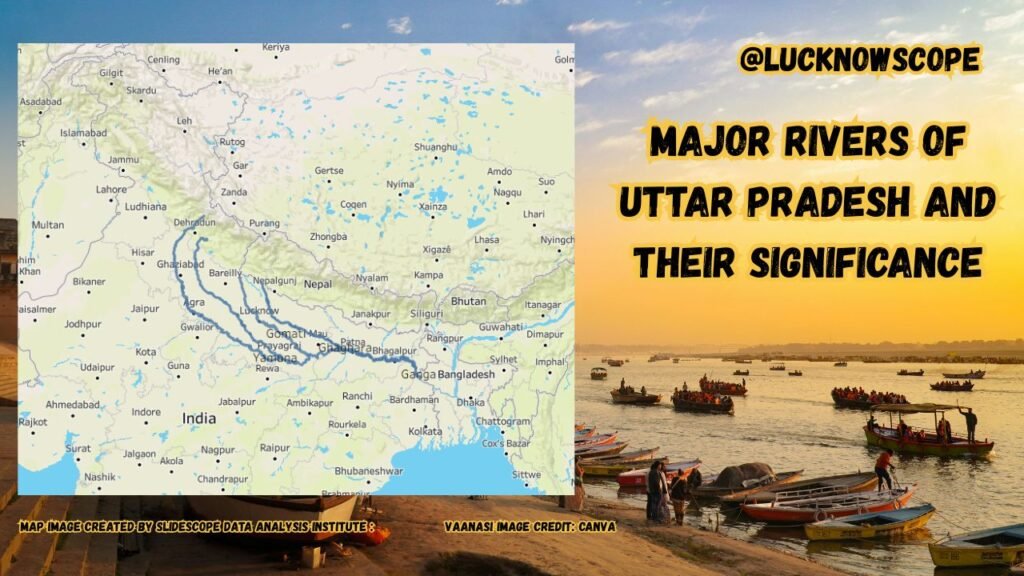
“Water is the most precious resource,” I tell my students, and Uttar Pradesh is blessed with abundant water resources. The Ganges River, along with the Yamuna, Gomti, and other rivers, provides water for irrigation, domestic use, and industrial purposes.
According to data from the Central Water Commission, Uttar Pradesh receives substantial water from both surface and groundwater sources. The state’s irrigation infrastructure, built over decades, supports agriculture across millions of hectares. The Lucknow region itself benefits from the Gomti River, which has been central to the city’s development and continues to be vital for water supply.
The Jal Shakti Ministry has been working on various initiatives to improve water resource management in the state, recognizing that sustainable management of these resources is crucial for future development.
Forest Resources and Biodiversity
Though Uttar Pradesh is predominantly an agricultural state, it still maintains forest cover of approximately 4,700 square kilometers, hosting diverse ecosystems and biodiversity. The forests in regions like Dudhwa National Park in Lakhimpur Kheri district are home to endangered species like the Bengal tiger and Indian rhinoceros.
These forests provide not just ecological services (like carbon sequestration and climate regulation) but also economic resources—timber, medicinal plants, and non-timber forest products that support local livelihoods.
Energy Resources: Power for Progress
Coal and other energy resources are significant contributors to UP’s energy security. While major coal deposits are in neighboring states, Uttar Pradesh has substantial natural gas reserves and renewable energy potential. The state has been increasingly focusing on solar and wind energy, particularly in its western and central regions.
The thermal power plants distributed across the state (many powered by coal from central India) play a crucial role in meeting the energy needs of nearly 230 million people. As an educator, I appreciate how reliable electricity has transformed our schools, enabling computer labs and digital learning tools that were unimaginable two decades ago.
The Economic Impact: Connecting Resources to Prosperity
To illustrate the real-world impact: when a student in my class asks why Uttar Pradesh is economically important to India, I explain it through the resource chain. A farmer in Bundeli region uses fertilizer made from phosphate mined locally. He grows wheat using water from irrigation channels fed by rivers. He sends his produce to markets in cities like Lucknow, using roads built with cement from local limestone. These minerals, agricultural products, and resources create a complex economic ecosystem that employs millions.
According to the Ministry of Mines and various government publications, the mineral and mining sector contributes significantly to the state’s GDP and generates substantial revenue for both state and central governments.
Challenges and the Path Forward
However, I would be remiss not to mention the challenges. Over-exploitation of resources, environmental degradation, water pollution, and unsustainable agricultural practices pose threats to long-term resource sustainability. The depletion of groundwater in certain regions, for instance, is a concerning trend.
The Uttar Pradesh Pollution Control Board and various government agencies are working on sustainable resource management, but implementation remains a challenge. Climate change also threatens our agricultural productivity and water availability.
Conclusion: Stewardship for Future Generations
As I reflect on Uttar Pradesh’s natural wealth, I’m reminded of a quote I often share with my students: “We do not inherit the earth from our ancestors; we borrow it from our children.” Our state’s minerals, fertile soil, water, and forests are not infinite. They are precious legacies that require thoughtful management and sustainable practices.
Understanding our natural resources isn’t just an academic exercise—it’s about appreciating what surrounds us and recognizing our responsibility as custodians of this wealth. Whether it’s the limestone that builds our cities, the water that irrigates our fields, or the forests that breathe life into our environment, each resource tells a story of geological time, human effort, and interconnected prosperity.
For young people especially, I believe this knowledge empowers them to make informed decisions about development, environmental protection, and their own futures. The challenge before us is not just extraction and utilization of these resources, but their sustainable management for present and future generations.
Uttar Pradesh’s natural wealth is real, significant, and quantifiable—but it’s also finite and fragile. The responsibility for its stewardship rests with all of us.
Pingback: 100 Important Topics for State Government Jobs in Uttar Pradesh: What Students Should Know - Lucknowscope